What hard water does to hair and skin
There is a real, measured effect here, and it is more specific than the marketing suggests. It is also not the effect a shower filter addresses.
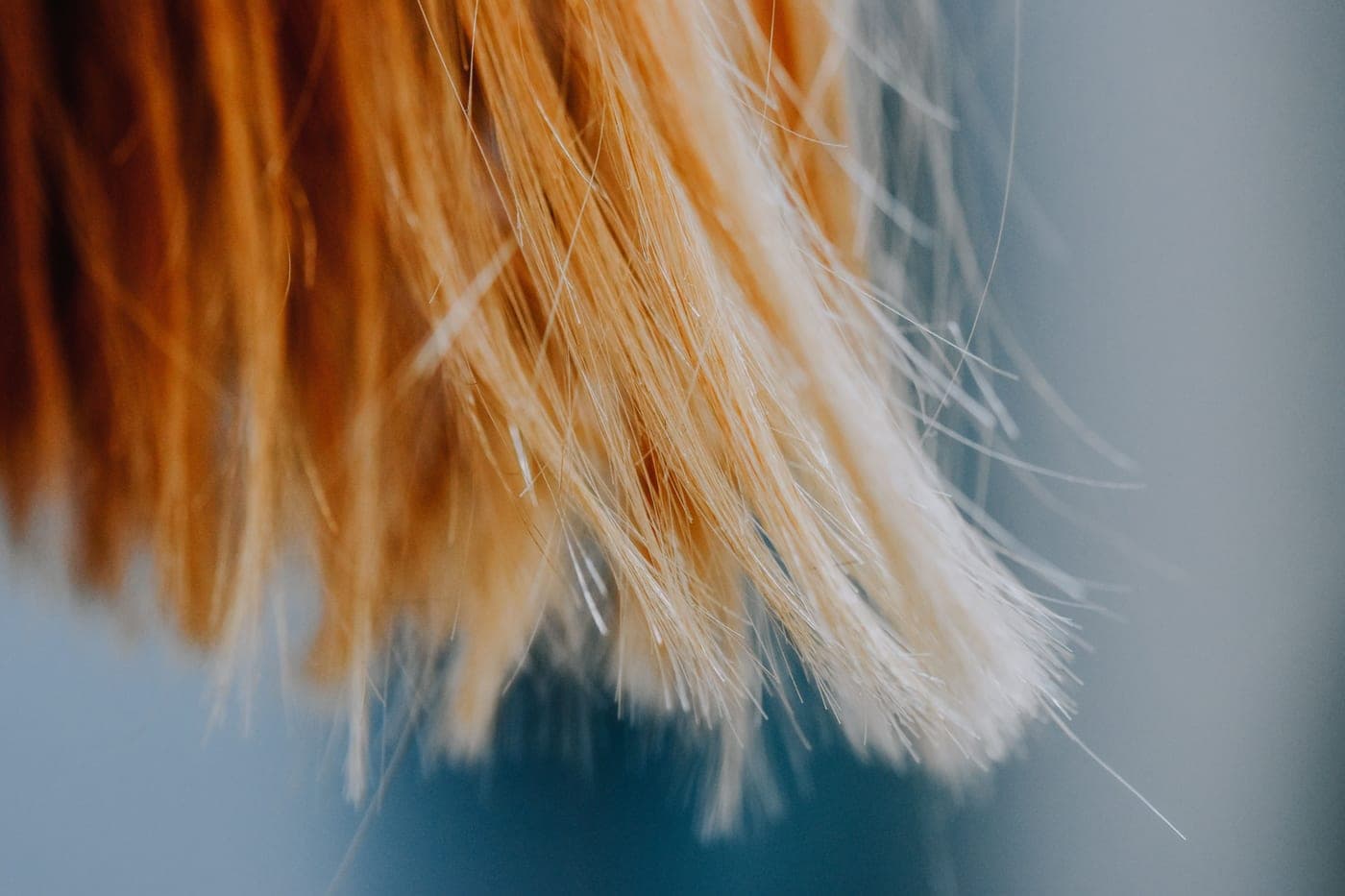
Hard water measurably weakens hair: in a 2018 controlled study, mean tensile strength fell from 255.49 in the control to 234.16 after hard water treatment, significant at P = 0.001, while deionized water produced no significant change. That is breakage, not hair loss — and a shower filter removes no hardness.
The study, in detail
Luqman and colleagues published in the International Journal of Trichology in 2018. Three groups: an untreated control, a group treated with deionized water, and a group treated with hard water. Tensile strength was measured on a universal testing machine and compared with a paired t-test.
Their stated conclusion: hard water decreases the strength of hair and thus increases breakage. Full citation in the sources below.
The design is what makes this useful. The deionized group is the control that matters — it shows the wetting and handling alone did not weaken the hair. The difference is attributable to the hardness, and it is about an eight percent drop in strength. That is not catastrophic, and over repeated daily exposure on hair that is also being combed, dried and tied back, an eight percent strength deficit is the kind of thing that shows up as split ends and snapped strands rather than as a dramatic event.
What it does not show
- It does not show hair loss. Tensile strength is a property of the hair shaft. Androgenetic hair loss is a follicular process driven by hormones and genetic sensitivity, and nothing in this study speaks to it.
- It does not show that filtering helps, because the intervention tested was water composition, not a filter. A shower filter does not produce deionized water and does not reduce hardness.
- It does not measure scalp effects. A separate scanning electron microscopy study has looked at hair shaft surface changes related to water hardness; that is a different measurement and a different claim.
Skin: the association, and the trial that tested it
For skin the evidence runs the other way round — there is a strong observational association and a disappointing intervention result. A systematic review and meta-analysis found an association between water hardness and atopic eczema and skin barrier function. Children in hard-water areas have more eczema.
So the obvious question was asked and answered: the Softened Water Eczema Trial randomized children with eczema to a domestic ion-exchange softener or standard care, and found no significant difference in objective eczema severity. Removing the hardness did not improve established disease.
The film, and why lather matters more than it sounds
The mundane mechanism is worth stating because it explains most of what people actually feel. Calcium and magnesium react with the fatty acids in soap to form an insoluble scum. That is why hard water will not lather: the surfactant is being consumed by the minerals before it can do its job. The residue deposits on skin and hair, which is the film you feel after towelling off and the dullness you see in the mirror.
The practical consequences are that people use more product, wash more aggressively, and handle their hair more — and mechanical handling is itself a documented contributor to breakage. Some of what gets attributed to hard water chemistry is the behavioural response to hard water.
What actually helps
- For the hardness mechanism — a softener. It is the only device that removes the cause. The comparison.
- For the chlorine mechanism — a shower filter, which does that job properly. The picks.
- For the behavioural mechanism — chelating or clarifying shampoo periodically, and less aggressive handling. Free, and it addresses the part of the problem the equipment does not.
- For color-treated hair specifically — the chlorine case is stronger, because oxidation acts on dye as well as on keratin. The detail.
Questions people actually ask
+ Does hard water damage hair?
Yes, measurably. A 2018 controlled study found hard water significantly reduced hair tensile strength while deionized water did not.
+ Does hard water cause hair loss?
It is associated with breakage rather than androgenetic hair loss. The measured effect is on the strength of the hair shaft, not on the follicle.
+ Does hard water cause skin bumps or eczema?
There is a documented association between hardness and atopic eczema. But a randomized trial of water softeners found no significant improvement in eczema severity, which complicates the causal story.
+ Will a shower filter fix hard water hair damage?
Not the hardness mechanism, because it removes no hardness. It removes chlorine, which is a separate stressor on the same hair.
+ Why does my hair feel rough after showering?
Calcium and magnesium react with soap to form an insoluble residue that deposits on the hair. That film is what you are feeling.
Sources
Everything on this page traces to one of these. Where a source is brand-owned we say so, because a filter maker explaining filter chemistry has an interest and you are entitled to weigh it.
- Luqman MW et al. (2018). To evaluate and compare changes in baseline strength of hairs after treating them with deionized water and hard water and its role in hair breakage. International Journal of Trichology 10(3):113-117.
- International Journal of Trichology — full text of the Luqman et al. hard water and hair tensile strength study
- Indian Journal of Dermatology, Venereology and Leprology — scanning electron microscopy study of hair shaft changes related to hardness of water
- Jabbar-Lopez ZK et al. (2021). The effect of water hardness on atopic eczema and skin barrier function: a systematic review and meta-analysis.
- Thomas KS et al. (2011). A multicentre randomized controlled trial and economic evaluation of ion-exchange water softeners for the treatment of eczema in children: the Softened Water Eczema Trial (SWET).