Jolie vs Afina
Two filtered shower heads with the same core media and very different amounts of evidence behind them. One has an independent bench result; the other has the biggest name in the category.
Disclosure — some links on this page go to Amazon, and we earn a commission if you buy through them. It costs you nothing extra and it does not change what we recommend or in what order. The full disclosure.
Afina names its media, publishes a flow rate, and was independently measured at about 99 percent chlorine reduction. Jolie publishes 1.8 GPM and a 90-day subscription cadence and has no independent measurement we could find. Neither holds a certification. Afina's test also showed disinfection byproducts rising.
Quick picks
Ranked on what can be verified: a traceable certification first, then media matched to your disinfectant. Tap a row to jump to the full write-up.
| # | Product | Best for | Certification | Price |
|---|---|---|---|---|
| 1 |  Afina Filtered Shower HeadThe best chlorine number independently recorded for any filtered shower head — just under 99 percent. The same test found it reduced no hardness at all and that disinfection byproducts rose rather than fell, which is why it does not top our ranking.KDF-55 with calcium sulfite and activated ca… | The highest measured chlorine reduction | None | |
| 2 | 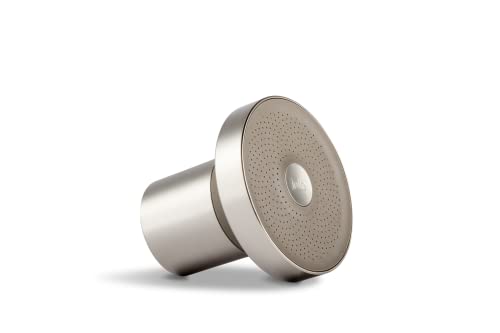 Jolie Filtered ShowerheadThe most searched shower filter in the United States, with a media pairing that makes sense and a certification line that does not. "Surpassing NSF-177 certifications" is a claim about exceeding a standard the product is not stated to hold.KDF-55 and calcium sulfite | The best-known name in the category | None |
Every figure in this table links to the page it came from in the write-ups below. Units we claim to have tested: 0.
Afina Filtered Shower Head
The highest measured chlorine reduction
The best chlorine number independently recorded for any filtered shower head — just under 99 percent. The same test found it reduced no hardness at all and that disinfection byproducts rose rather than fell, which is why it does not top our ranking.
Published specifications
- Filter media
- KDF-55 with calcium sulfite and activated carbonSource: Afina filtered shower head, chrome — listing on Amazon.com (retrieved 2026-09-01)
- Stated flow rate
- 2.5 GPM with a 1.8 GPM restrictor supplied; 1.85 GPM measured independentlyThe measured figure is WaterFilterGuru's, not ours. A separate 1.8 GPM variant is sold for California and New York.Source: WaterFilterGuru, "Afina Shower Head Review" — independent lab testing, credited to them (retrieved 2026-09-06)
- Rated cartridge life
- 90 days on the shower head listing; the replacement-filter listing says every 2 monthsAfina's own two listings disagree. We report both rather than picking the flattering one; the independent reviewer recorded 2 months.Source: Afina filtered shower head, chrome — listing on Amazon.com (retrieved 2026-09-01)
- Chloramine
- Not publishedAfina publishes no chloramine performance figure.
- Format
- Replacement shower head with integrated filterSource: Afina filtered shower head, chrome — listing on Amazon.com (retrieved 2026-09-01)
- Housing
- Not publishedFinishes are listed — chrome, brushed nickel, matte black — but no housing material is stated.
What it does well
- Independently measured at just under 99% chlorine reduction, 1.68 PPM down to 0.02 PPM
- Media named outright: KDF-55 with calcium sulfite and activated carbon
- Measured flow of 1.85 GPM, which the reviewer recorded as retaining 100% of baseline
- Sold in several finishes, and in a 1.8 GPM variant for California and New York
Where it falls short
- No certification of any kind
- Disinfection byproducts rose in independent testing
- Marketed for hard water while reducing no hardness
- Short cartridge interval, and the maker's own figures disagree on what it is
What it does not do
- It does not soften water. An independent lab measured hardness going in at roughly 250 PPM and coming out at 251 — despite the hard-water marketing.
- It did not reduce disinfection byproducts in that test. All three measured DBPs increased after filtration rather than falling.
- It holds no certification. The independent reviewer recorded it as neither performance certified nor design certified.
Who it is for
Someone on chlorinated municipal water who wants the strongest measured chlorine result in a replacement head and is buying for that specifically.
Skip it if
Your report shows disinfection byproducts near their limits, or you want a certification. Neither is this product's strength — the DBP discussion.
#ad · how we are funded · price as of October 16, 2026
Jolie Filtered Showerhead
The best-known name in the category
The most searched shower filter in the United States, with a media pairing that makes sense and a certification line that does not. "Surpassing NSF-177 certifications" is a claim about exceeding a standard the product is not stated to hold.
Published specifications
- Filter media
- KDF-55 and calcium sulfiteSource: Jolie — The Jolie Filtered Showerhead (retrieved 2026-09-01)
- Stated flow rate
- 1.8 GPMStated as compliant with California and New York water consumption standards.Source: Jolie — The Jolie Filtered Showerhead (retrieved 2026-09-01)
- Rated cartridge life
- Every 90 days on subscriptionNo gallon capacity is published.Source: Jolie — The Jolie Filtered Showerhead (retrieved 2026-09-01)
- Chloramine
- Not publishedJolie publishes no chloramine performance data.
- Format
- Replacement shower head with integrated filterSource: Jolie Filtered Showerhead — listing on Amazon.com (retrieved 2026-09-01)
- Housing
- Not publishedJolie lists finishes rather than a housing material.
What it does well
- Media named outright: KDF-55 and calcium sulfite
- 1.8 GPM, compliant with California and New York flow limits
- 90-day cartridge cadence on subscription, so replacement actually happens
- Replaces the shower head, so there is nothing extra hanging off the arm
Where it falls short
- "Surpassing NSF-177 certifications" is a claim, not a certification
- No gallon capacity published, so cost per gallon cannot be computed from its own data
- Nothing published about chloramine
What it does not do
- It does not soften water. KDF-55 and calcium sulfite do not remove calcium or magnesium.
- It does not hold a stated NSF/ANSI 177 certification; the published wording is that it surpasses NSF-177 certifications.
- It does not treat hair loss. Reduced shedding and reduced breakage are different claims from androgenetic hair loss — see the hair-loss evidence page.
Who it is for
A reader who wants the well-known unit, a 1.8 GPM head that meets state flow limits, and a subscription that removes the decision about when to change the cartridge.
Skip it if
You want a verifiable certification rather than a testing claim, or you want a published gallon capacity you can do arithmetic with.
#ad · how we are funded · price as of October 16, 2026
Side by side
Every measured figure is WaterFilterGuru's, credited below. We tested neither product.
The evidence gap is the whole comparison
These two are close relatives chemically. Both are replacement shower heads. Both are built on KDF-55 and calcium sulfite, with Afina adding activated carbon. Neither holds a certification from any body. On paper they should perform similarly, and there is no reason to think they do not.
The difference is that somebody has actually measured one of them. Afina went on an independent bench and came back at roughly 99 percent chlorine reduction, with a flow rate confirmed at 1.85 GPM retaining full baseline pressure. Jolie — the most-searched shower filter in the United States — has no such result that we could locate, and its own materials describe its media as "surpassing NSF-177 certifications" rather than holding one.
The result Afina would rather you skipped
In the same independent test, all three disinfection byproducts the reviewer measured increased after filtration rather than falling. That is a genuinely odd finding and we are not going to omit it because the headline number is good.
It is one test and the mechanism is not obvious, so we would not treat it as settled. But if your water report shows TTHM or HAA5 near their limits, neither of these heads is your answer — disinfection byproducts need carbon-block volume a shower head does not have, which is why the units with published DBP performance are inline bodies rather than heads.
What Jolie is actually selling
Not chemistry — the chemistry is common to both. Jolie sells disclosure of a different kind, industrial design, a subscription that means the cartridge genuinely gets replaced, and a brand you have heard of. Its clinical claims are about hair shedding, colored hair and dry skin rather than about chlorine percentages.
Those are real things and one of them matters more than it sounds. The most common way this category disappoints is an owner who fits a filter and never re-cartridges it; a 90-day subscription removes that decision entirely. Whether the premium is worth it is a personal judgment rather than a technical one — but it is not a judgment about filtration performance, because on that question Jolie has published less than Afina has.
Flow, and a number worth understanding
Afina publishes 2.5 GPM with a 1.8 GPM restrictor included, and the independent measurement came in at 1.85 GPM. Jolie publishes 1.8 GPM flat. In practice these will feel similar, and both sit at or near the level several states now require on new fixtures. Neither is going to feel weak because of filtration — what actually causes pressure loss is a clogged cartridge, not the filter itself.
Neither one softens water
Afina is marketed into hard-water language and reduced hardness by one part per million in the wrong direction — 250 PPM in, 251 out. Jolie leans on hard-water framing too. No shower filter performs ion exchange, and independent testing of this category found none that reduced hardness. Why that is mechanical rather than a quality problem.
The verdict
- Buy Afina if you want the head with an actual independent measurement behind it and a fuller media list, at a lower price than Jolie.
- Buy Jolie if the design, the brand and a subscription that guarantees cartridge changes are worth a premium to you — accepting that you are not buying better-evidenced filtration.
- Buy neither if you want a certification. Neither holds one.
- Buy neither if your report shows disinfection byproducts near their limits — and note Afina's went up in testing.
- Buy neither for hard water. Neither softens, and Afina was measured not doing it.
What we would skip, and why
Questions people actually ask
+ Is Afina better than Jolie?
On measurable evidence, yes. Afina names more of its media, publishes a flow rate that was independently confirmed, and was measured at about 99 percent chlorine reduction. Jolie has no independent measurement we could find. Jolie's advantages are design, brand and a subscription cadence.
+ Is Jolie NSF certified?
No. Its wording is that its media surpasses NSF-177 certifications, which describes exceeding a standard rather than holding one. Afina holds no certification either.
+ Why did Afina's disinfection byproducts increase?
We do not know, and neither does the reviewer who measured it. All three byproducts measured rose after filtration in that test. It is one result rather than a settled finding, but it is a reason not to buy either head for a byproduct problem.
+ Do either of them help with hard water?
No. Afina was measured at 250 PPM in and 251 PPM out. No shower filter softens water.
Sources
Everything on this page traces to one of these. Where a source is brand-owned we say so, because a filter maker explaining filter chemistry has an interest and you are entitled to weigh it.
- WaterFilterGuru, "The Best Shower Head Filter" — independent lab testing, credited to them (retrieved 2026-09-01)
- Plumbing & Mechanical, "NSF/ANSI Standard 177: A Level Playing Field for Shower Filter Claims" (retrieved 2026-09-01)
- PICKI NIKI, "Filtered shower head technology explained" — brand-owned, cited for its published contact-time figures (retrieved 2026-09-01)
- US EPA — Consumer Confidence Reports (CCR) for drinking water