Shower filter subscriptions: what you are actually buying
The most common way to waste money on a shower filter is to fit one and never change the cartridge. A subscription solves exactly that — and hands the seller control of how often you buy.

Disclosure — some links on this page go to Amazon, and we earn a commission if you buy through them. It costs you nothing extra and it does not change what we recommend or in what order. The full disclosure.
A subscription's real value is behavioral, not financial: it removes the decision that most owners get wrong, which is when to replace the cartridge. The cost is that the interval is set by the seller rather than by your water. The premium brands in this category sell this way; the certified budget units mostly do not.
The failure a subscription actually fixes
The commonest waste of money in this category is not buying the wrong filter. It is buying a perfectly good one, fitting it, and never re-cartridging it. A spent cartridge does not announce itself — vitamin C and KDF media do not necessarily clog as they exhaust, so the shower keeps behaving normally while the filtration quietly stops. You are then maintaining a decorative restriction in your plumbing.
A subscription removes that failure mode by removing the decision. The cartridge arrives, its presence on the counter is the reminder, and the job gets done. That is a genuine benefit and it is worth more than it sounds — a mediocre filter that is always fresh outperforms an excellent one that is two years stale.
Who sells this way, and at what cadence
In the set we cover, the subscription model belongs to the premium replacement-head brands. Jolie publishes a 90-day cartridge cadence sold on subscription. Canopy sells its cartridges on subscription in the same way. Both are at the expensive end of the category and both are shower heads rather than inline filters.
The certified units mostly do not work this way. Sprite's Slim-Line 2 and the Culligan units run on ordinary replacement cartridges you buy when you need them, on published intervals of around 10,000 gallons or six months. Philips publishes the longest interval in our set, up to 50,000 liters — roughly 13,000 gallons — every four to six months.
Subscription cadence against the buy-as-needed alternatives
Purchase price + (cartridges per year x cartridge price). Cadence comes from published specifications; the money comes from the live price layer or is left blank.
Prices as of October 16, 2026, from the live retailer feed. Cartridge prices are not included in the year-one figure above because they are a separate purchase with a separate live price. The full method.
Ninety days versus six months is the whole argument
Look at that cadence column rather than the purchase prices. A 90-day subscription means four cartridges a year. A six-month interval means two. Philips's four-to-six-month figure sits at the same end as the six-month units. Over two years, a filter on a quarterly cycle buys eight cartridges while a six-month unit buys four.
That difference is not evidence of a scam — a smaller cartridge in a shower head genuinely holds less media than a larger inline body, and 90 days may well be the honest interval for it. But it is the number that decides what your filter costs, and it is set by the product you chose, not by the subscription wrapper around it. The full twelve-month arithmetic.
What the seller gets, and why that is not automatically bad
A subscription converts a one-off purchase into recurring revenue, which is obviously why companies want it. It is worth naming plainly rather than pretending the arrangement is charity. But the interests are not straightforwardly opposed here: a customer whose cartridge is always fresh is a customer whose filter actually works, and that is the outcome both sides want.
The place to be careful is the cadence itself. A seller setting the replacement interval has an obvious incentive to set it short, and no accredited body audits that number the way IAPMO or NSF audits a chlorine reduction claim. A published cadence is a manufacturer claim, and we treat it like every other manufacturer claim on this site — reported with its source, not endorsed.
Your water sets the real interval, not the calendar
This is the part a subscription structurally cannot get right. Cartridge life depends on how much disinfectant your utility puts in the water and how much water you actually run. A two-person household on lightly chlorinated supply and a family of five on a heavily dosed one will exhaust identical cartridges months apart, and both get the same box on the same day.
Vitamin C units make this especially vivid, because the media is consumed by the chemistry rather than loaded to a capacity — its life tracks the disinfectant dose directly. How often to change a shower filter covers the signals worth watching, and they are mostly not the ones the calendar gives you.
When a subscription is worth it
- Worth it if you know from experience that you will not otherwise replace the cartridge. This is the single best reason and it applies to a lot of people.
- Worth it if you have already chosen a product whose cadence you are happy with — the subscription is then just delivery.
- Not worth it if you are using it to justify a shorter cadence than the filter needs. Buy the longer-interval filter instead.
- Not worth it if you would rather own a certified unit. In our set, the certified filters are sold as ordinary cartridges, not subscriptions.
- Check first whether the subscription cartridge is a proprietary part or a commodity one. A shared cartridge family means you can buy it anywhere; a proprietary one means you cannot. Replacement cartridges.
Quick picks
Ranked on what can be verified: a traceable certification first, then media matched to your disinfectant. Tap a row to jump to the full write-up.
| # | Product | Best for | Certification | Price |
|---|---|---|---|---|
| 1 | 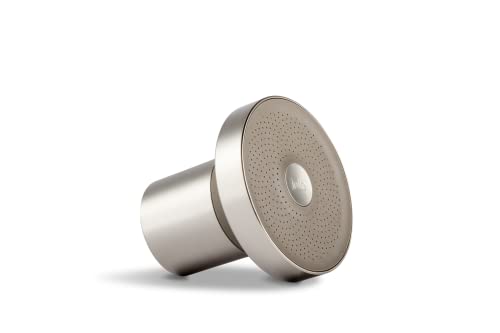 Jolie Filtered ShowerheadThe most searched shower filter in the United States, with a media pairing that makes sense and a certification line that does not. "Surpassing NSF-177 certifications" is a claim about exceeding a standard the product is not stated to hold.KDF-55 and calcium sulfite | The best-known name in the category | None | |
| 2 |  Canopy Filtered ShowerheadCanopy publishes almost nothing you can check — no media, no flow rate, no capacity, no certification. What saves it is somebody else's number: WaterFilterGuru measured 97% chlorine reduction, from 2.7 PPM down to 0.06.Not published | Measured chlorine reduction | None | |
| 3 |  Sprite Slim-Line 2Certified to NSF/ANSI 177 by IAPMO, and the most instructive product in this set: when WaterFilterGuru measured it independently they got 42% chlorine reduction — a reminder that the certification floor is 50% of a controlled challenge, not a promise about your shower.KDF media with calcium sulfite, branded "Chl… | Certified media, honestly benchmarked | NSF/ANSI 177 | |
| 4 |  Philips AWP1775CHWorth owning and worth studying. Its listing says "NSF-Certified KDF", which certifies the material inside the cartridge, not the finished device. That is a real certification of a real thing, and it is not the same as the filter being certified.Three-stage filtration with double mesh and … | Reading a certification claim correctly | NSF certification of the KDF filtration material |
Every figure in this table links to the page it came from in the write-ups below. Units we claim to have tested: 0.
Jolie Filtered Showerhead
The best-known name in the category
The most searched shower filter in the United States, with a media pairing that makes sense and a certification line that does not. "Surpassing NSF-177 certifications" is a claim about exceeding a standard the product is not stated to hold.
Published specifications
- Filter media
- KDF-55 and calcium sulfiteSource: Jolie — The Jolie Filtered Showerhead (retrieved 2026-09-01)
- Stated flow rate
- 1.8 GPMStated as compliant with California and New York water consumption standards.Source: Jolie — The Jolie Filtered Showerhead (retrieved 2026-09-01)
- Rated cartridge life
- Every 90 days on subscriptionNo gallon capacity is published.Source: Jolie — The Jolie Filtered Showerhead (retrieved 2026-09-01)
- Chloramine
- Not publishedJolie publishes no chloramine performance data.
- Format
- Replacement shower head with integrated filterSource: Jolie Filtered Showerhead — listing on Amazon.com (retrieved 2026-09-01)
- Housing
- Not publishedJolie lists finishes rather than a housing material.
What it does well
- Media named outright: KDF-55 and calcium sulfite
- 1.8 GPM, compliant with California and New York flow limits
- 90-day cartridge cadence on subscription, so replacement actually happens
- Replaces the shower head, so there is nothing extra hanging off the arm
Where it falls short
- "Surpassing NSF-177 certifications" is a claim, not a certification
- No gallon capacity published, so cost per gallon cannot be computed from its own data
- Nothing published about chloramine
What it does not do
- It does not soften water. KDF-55 and calcium sulfite do not remove calcium or magnesium.
- It does not hold a stated NSF/ANSI 177 certification; the published wording is that it surpasses NSF-177 certifications.
- It does not treat hair loss. Reduced shedding and reduced breakage are different claims from androgenetic hair loss — see the hair-loss evidence page.
Who it is for
A reader who wants the well-known unit, a 1.8 GPM head that meets state flow limits, and a subscription that removes the decision about when to change the cartridge.
Skip it if
You want a verifiable certification rather than a testing claim, or you want a published gallon capacity you can do arithmetic with.
#ad · how we are funded · price as of October 16, 2026
Canopy Filtered Showerhead
Measured chlorine reduction
Canopy publishes almost nothing you can check — no media, no flow rate, no capacity, no certification. What saves it is somebody else's number: WaterFilterGuru measured 97% chlorine reduction, from 2.7 PPM down to 0.06.
Published specifications
- Filter media
- Not publishedCanopy's own product page states no filter media. We checked it on 2026-09-01.
- Stated flow rate
- Not publishedNo flow rate is published on Canopy's product page.
- Rated cartridge life
- Not publishedNo gallon capacity or replacement interval is published on the product page.
- Chloramine
- Not publishedNot stated.
- Format
- Replacement shower head with integrated filter, three spray settingsSource: Canopy — Filtered Showerhead (retrieved 2026-09-01)
- Housing
- Not publishedNot stated.
What it does well
- Independently measured at 97% chlorine reduction, 2.7 PPM down to 0.06 PPM
- Three spray settings on a design-led head
- Widely stocked, so cartridges are easy to find
Where it falls short
- Publishes no media list, no flow rate, no capacity and no certification
- Was not one of the units shown to remove disinfection byproducts in that test
- Nothing published about chloramine
What it does not do
- It does not soften water. No filter in the independent test set reduced hardness, including this one.
- It publishes no filter media, flow rate, cartridge capacity or certification on its own product page.
- It removed chlorine in that test but was not among the two units that removed disinfection byproducts.
Who it is for
A reader who trusts an independent measurement more than a spec sheet, and who wants a design-led head rather than an inline puck.
Skip it if
You want to compare it on paper. There is no paper. Every figure we have for this product came from someone else's lab.
#ad · how we are funded · price as of October 16, 2026
Sprite Slim-Line 2
Certified media, honestly benchmarked
Certified to NSF/ANSI 177 by IAPMO, and the most instructive product in this set: when WaterFilterGuru measured it independently they got 42% chlorine reduction — a reminder that the certification floor is 50% of a controlled challenge, not a promise about your shower.
Published specifications
- Filter media
- KDF media with calcium sulfite, branded "Chlorgon"Source: WaterFilterGuru, "Sprite Slim-Line 2 Shower Filter: A Data-Driven Review" (retrieved 2026-09-01)
- Stated flow rate
- 1.8 GPM claimed; 1.65 GPM measured independentlyThe measured figure is WaterFilterGuru's, not ours.Source: WaterFilterGuru, "Sprite Slim-Line 2 Shower Filter: A Data-Driven Review" (retrieved 2026-09-01)
- Rated cartridge life
- 10,000 gallons, or 6 monthsSource: WaterFilterGuru, "Sprite Slim-Line 2 Shower Filter: A Data-Driven Review" (retrieved 2026-09-01)
- Chloramine
- Not publishedNo chloramine performance is published for this unit.
- Format
- Inline, fits between the arm and any shower headSource: Sprite Slim-Line 2 — listing on Amazon.com (retrieved 2026-09-01)
- Housing
- PlasticDescribed in the independent review as feeling flimsier than most of the filters tested alongside it.Source: WaterFilterGuru, "Sprite Slim-Line 2 Shower Filter: A Data-Driven Review" (retrieved 2026-09-01)
What it does well
- NSF/ANSI 177 certification from IAPMO, per the independent review that checked it
- KDF plus calcium sulfite, a media pairing with a real mechanism behind it
- 10,000 gallon / 6 month cartridge
- Low-profile inline body, roughly an inch and a half tall
Where it falls short
- Independently measured at 42% chlorine reduction, well below the marketing
- Plastic housing described by that reviewer as flimsier than most
- Measured flow of 1.65 GPM against a claimed 1.8
What it does not do
- It does not soften water. Independent measurement found hardness effectively unchanged at 128.19 PPM going in.
- It publishes no chloramine performance.
- Its certification does not mean 100% chlorine removal in your shower.
Who it is for
A reader who wants the certification and the caveat together, and who values a low-profile inline unit that does not change their shower head.
Skip it if
You want the highest measured chlorine reduction available. On the one independent measurement we could find, this was not it.
#ad · how we are funded · price as of October 16, 2026
Philips AWP1775CH
Reading a certification claim correctly
Worth owning and worth studying. Its listing says "NSF-Certified KDF", which certifies the material inside the cartridge, not the finished device. That is a real certification of a real thing, and it is not the same as the filter being certified.
Published specifications
- Filter media
- Three-stage filtration with double mesh and NSF-certified KDF materialSource: Philips AWP1775CH/37 shower filter — listing on Amazon.com (retrieved 2026-09-01)
- Stated flow rate
- Not publishedNo flow rate is published on the US listing.
- Rated cartridge life
- Up to 50,000 L (about 13,208 gallons), replaced every 4-6 monthsPublished for the AWP1775 line; the figure is the manufacturer's, for the international model.Source: Philips AWP1775 in-line shower filter listing on Amazon.com (retrieved 2026-09-01)
- Chloramine
- Not publishedNot stated.
- Format
- Inline, fits handheld, rainfall or fixed headsSource: Philips AWP1775CH/37 shower filter — listing on Amazon.com (retrieved 2026-09-01)
- Housing
- Anti-scald material, chrome finishSource: Philips AWP1775CH/37 shower filter — listing on Amazon.com (retrieved 2026-09-01)
What it does well
- Three-stage filtration with double mesh and NSF-certified KDF material
- Large published capacity — the international version states up to 50,000 L, about 13,208 gallons
- Anti-scald housing rated for hot and cold
- Fits handheld, rainfall and fixed heads, tool-free
Where it falls short
- The certification applies to the media, not the device
- US listing publishes no flow rate
- Cartridge availability varies between the US and international model numbers
What it does not do
- It does not soften water.
- It is not stated to be a device certified to NSF/ANSI 177; the KDF material is what carries the NSF certification.
- It publishes no chloramine performance.
Who it is for
A reader who wants a large-capacity inline unit from a manufacturer with a plumbing division behind it.
Skip it if
You read "NSF-Certified" as meaning the unit passed NSF/ANSI 177. It does not say that.
#ad · how we are funded · price as of October 16, 2026
What we would skip, and why
Questions people actually ask
+ Are shower filter subscriptions worth it?
Their value is behavioral rather than financial. If a subscription is what makes you actually replace the cartridge, it is worth it, because an unmaintained filter delivers nothing. If you would replace it anyway, you are paying for delivery and handing the seller control of the interval.
+ Which shower filters are sold on subscription?
In the set we cover, the premium replacement-head brands — Jolie, on a published 90-day cadence, and Canopy. The certified units we cover, including the Sprite Slim-Line 2 and the Culligan range, are sold as ordinary replacement cartridges instead.
+ Is a 90-day cartridge cadence normal?
It is at the short end. Several units in our set publish 10,000 gallons or six months, and Philips publishes up to roughly 13,000 gallons at four to six months. A shower head holds less media than an inline body, so a shorter interval is not automatically suspicious — but it doubles the number of cartridges you buy.
+ Can I cancel and just buy cartridges when I need them?
For products whose cartridge is a commodity part, yes. The thing to check before you buy is whether the cartridge is shared across a family of units or proprietary to one model, because that determines whether you have any choice at all.
+ Does subscribing make the filter work better?
Only in the sense that a fresh cartridge works better than a spent one. Subscribing changes nothing about the filter itself — the cadence is a property of the product you bought.
Sources
Everything on this page traces to one of these. Where a source is brand-owned we say so, because a filter maker explaining filter chemistry has an interest and you are entitled to weigh it.
- WaterFilterGuru, "The Best Shower Head Filter" — independent lab testing, credited to them (retrieved 2026-09-01)
- AquaEarth, "KDF vs vitamin C vs carbon shower filter" — brand-owned explainer, cited with that stated (retrieved 2026-09-01)
- Plumbing & Mechanical, "NSF/ANSI Standard 177: A Level Playing Field for Shower Filter Claims" (retrieved 2026-09-01)
- US EPA — Consumer Confidence Reports (CCR) for drinking water