The twelve-month cost of a shower filter
Purchase price is the smaller number. This is the arithmetic nobody in this category publishes, with the reason our dollar columns look the way they do.

Disclosure — some links on this page go to Amazon, and we earn a commission if you buy through them. It costs you nothing extra and it does not change what we recommend or in what order. The full disclosure.
Twelve-month cost is purchase price + (cartridges per year x cartridge price). Cartridges per year comes from the published cadence: two on a six-month interval, four on a 90-day one. On a premium subscription the cartridges can cost more over a year than the filter did.
We surveyed the roundups ranking for this category's main terms. Every one lists a purchase price. Not one computes what the filter costs over a year including cartridges — despite cartridge life being a published specification on most products. For a buyer weighing a cheap inline unit against a premium head with a subscription, the twelve-month figure is the actual decision, and nobody does it.
The method
- Start with the purchase price. One-off.
- Find the published cadence. Six months, 90 days, or 6 to 9 months — it is in the maker's own material where they publish it, and tabulated here.
- Convert to cartridges per year. 12 divided by the interval in months. Six months gives two; 90 days gives four; nine months gives roughly 1.3.
- Multiply by the cartridge price, not the filter price.
- Add the two together, then divide by twelve for a monthly figure if that is how you think about it.
- Adjust for your water. Hard water and heavy chlorination shorten every published interval, so the honest version of this uses the short end of any range.
The cadence data
Published cartridge life, which sets cartridges per year
24 of 29 publish this figure. Every number below links to where it came from.
Compiled from the manufacturers’ own published material on 2026-09-01. We have measured none of it ourselves — see how we rank. Found an error? Tell us and we will correct it.
Two things fall out of that table. A 90-day subscription is four cartridges a year against two for a six-month unit — so at the same cartridge price it is double the running cost, and premium cartridges are not at the same price. And the products that publish no interval at all cannot be costed from their own data, which is a real gap rather than a rounding error.
The arithmetic, run live
Twelve-month cost of ownership
Purchase price + (cartridges per year x cartridge price). Cadence comes from published specifications; the money comes from the live price layer or is left blank.
Prices as of October 16, 2026, from the live retailer feed. Cartridge prices are not included in the year-one figure above because they are a separate purchase with a separate live price. The full method.
If the dollar columns above are empty, that is the correct output and not a bug. This site renders prices only from a live retailer feed, and where that feed has no current figure it shows none — because a remembered price is not a price. The cadence and cartridges-per-year columns are populated because those come from published specifications, and the money columns fill themselves in the moment the price layer has current numbers.
The comparison this arithmetic actually settles
Run it on any two products and the same pattern emerges. A cheap certified inline unit on a six-month cartridge has a low purchase price and a low, infrequent recurring cost. A premium head on a 90-day subscription has a high purchase price and a recurring cost that, over three years, dwarfs it.
That does not automatically make the premium product wrong. A subscription solves the commonest failure in this category — people fit a filter and never change it — and a filter that gets replaced on schedule is doing more for you than a cheaper one that has been inert since spring. What the arithmetic does is make you choose that deliberately rather than by accident.
What the twelve-month figure leaves out
- Water and energy. A filter does not change either. A lower-flow head does, and if you are replacing an old unregulated head with a 1.8 GPM filtered one, that is a real saving unrelated to filtration.
- Failure risk. A proprietary cartridge from a brand founded recently is a supply-chain bet. The cartridge families.
- Your actual usage. A gallon rating divided across four daily showers runs out four times faster than across one, and no published interval accounts for your household.
- Whether it is working at all. The cheapest cost of ownership in this category belongs to a filter someone stopped replacing, and it is buying nothing.
Quick picks
Ranked on what can be verified: a traceable certification first, then media matched to your disinfectant. Tap a row to jump to the full write-up.
| # | Product | Best for | Certification | Price |
|---|---|---|---|---|
| 1 |  Culligan HSH-C135One of the few units in this category with a certification you can trace to the body that issued it. Culligan states plainly that the HSH-C135 is tested and certified by IAPMO R&T, and it runs the same WHR-140 cartridge and the same 10,000-gallon interval as the rest of its filtered range.Not published | A certified handheld shower head | NSF/ANSI 177 | |
| 2 |  Sprite Slim-Line 2Certified to NSF/ANSI 177 by IAPMO, and the most instructive product in this set: when WaterFilterGuru measured it independently they got 42% chlorine reduction — a reminder that the certification floor is 50% of a controlled challenge, not a promise about your shower.KDF media with calcium sulfite, branded "Chl… | Certified media, honestly benchmarked | NSF/ANSI 177 | |
| 3 |  Weddell Duo Shower FilterThe only filter in this set whose maker publishes its NSF test dates and reduction ranges, and the one an independent lab measured at 100% chlorine removal. It also removed disinfection byproducts, which almost nothing else did.Dual cartridge: sediment filter plus activat… | Chlorine and disinfection byproducts | NSF/ANSI 177 +2 | |
| 4 |  Philips AWP1775CHWorth owning and worth studying. Its listing says "NSF-Certified KDF", which certifies the material inside the cartridge, not the finished device. That is a real certification of a real thing, and it is not the same as the filter being certified.Three-stage filtration with double mesh and … | Reading a certification claim correctly | NSF certification of the KDF filtration material | |
| 5 | 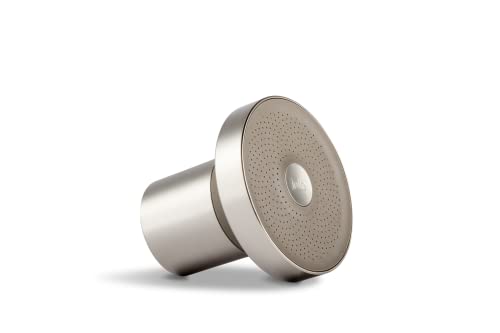 Jolie Filtered ShowerheadThe most searched shower filter in the United States, with a media pairing that makes sense and a certification line that does not. "Surpassing NSF-177 certifications" is a claim about exceeding a standard the product is not stated to hold.KDF-55 and calcium sulfite | The best-known name in the category | None |
Every figure in this table links to the page it came from in the write-ups below. Units we claim to have tested: 0.
Culligan HSH-C135
A certified handheld shower head
One of the few units in this category with a certification you can trace to the body that issued it. Culligan states plainly that the HSH-C135 is tested and certified by IAPMO R&T, and it runs the same WHR-140 cartridge and the same 10,000-gallon interval as the rest of its filtered range.
Published specifications
- Filter media
- Not publishedCulligan states what the unit reduces, but not what media does the reducing.
- Stated flow rate
- 1.8 GPMSource: Culligan — HSH-C135 hand-held filtered showerhead (retrieved 2026-09-01)
- Rated cartridge life
- 10,000 gallons, or 6 monthsSource: Culligan — HSH-C135 hand-held filtered showerhead (retrieved 2026-09-01)
- Chloramine
- Not publishedCulligan publishes nothing about chloramine for this unit.
- Format
- Handheld shower head with integrated filter, supplied with a hose and wall bracketSource: Culligan — HSH-C135 hand-held filtered showerhead (retrieved 2026-09-01)
- Housing
- Plastic, chrome finishSource: Culligan HSH-C135 — listing on Amazon.com (retrieved 2026-09-01)
What it does well
- Explicitly "tested and certified by IAPMO R&T", with the certifying body named
- Published cartridge life of 10,000 gallons or 6 months
- Five spray settings and a published 1.8 GPM rating
- The WHR-140 cartridge is shared across several Culligan units, which keeps it easy to find
Where it falls short
- Culligan does not publish what is inside the cartridge
- No chloramine data
- Replaces the shower head rather than adding to it
What it does not do
- It does not soften water, and Culligan does not claim it does.
- It states nothing about chloramine.
- Culligan does not publish the filter media used in it.
Who it is for
Someone who wants a certified chlorine filter, and who wants a handheld on a hose rather than a fixed head or an inline unit.
Skip it if
You like your current shower head. This replaces it, and its 1.8 GPM is a fixed part of the deal.
#ad · how we are funded · price as of October 16, 2026
Sprite Slim-Line 2
Certified media, honestly benchmarked
Certified to NSF/ANSI 177 by IAPMO, and the most instructive product in this set: when WaterFilterGuru measured it independently they got 42% chlorine reduction — a reminder that the certification floor is 50% of a controlled challenge, not a promise about your shower.
Published specifications
- Filter media
- KDF media with calcium sulfite, branded "Chlorgon"Source: WaterFilterGuru, "Sprite Slim-Line 2 Shower Filter: A Data-Driven Review" (retrieved 2026-09-01)
- Stated flow rate
- 1.8 GPM claimed; 1.65 GPM measured independentlyThe measured figure is WaterFilterGuru's, not ours.Source: WaterFilterGuru, "Sprite Slim-Line 2 Shower Filter: A Data-Driven Review" (retrieved 2026-09-01)
- Rated cartridge life
- 10,000 gallons, or 6 monthsSource: WaterFilterGuru, "Sprite Slim-Line 2 Shower Filter: A Data-Driven Review" (retrieved 2026-09-01)
- Chloramine
- Not publishedNo chloramine performance is published for this unit.
- Format
- Inline, fits between the arm and any shower headSource: Sprite Slim-Line 2 — listing on Amazon.com (retrieved 2026-09-01)
- Housing
- PlasticDescribed in the independent review as feeling flimsier than most of the filters tested alongside it.Source: WaterFilterGuru, "Sprite Slim-Line 2 Shower Filter: A Data-Driven Review" (retrieved 2026-09-01)
What it does well
- NSF/ANSI 177 certification from IAPMO, per the independent review that checked it
- KDF plus calcium sulfite, a media pairing with a real mechanism behind it
- 10,000 gallon / 6 month cartridge
- Low-profile inline body, roughly an inch and a half tall
Where it falls short
- Independently measured at 42% chlorine reduction, well below the marketing
- Plastic housing described by that reviewer as flimsier than most
- Measured flow of 1.65 GPM against a claimed 1.8
What it does not do
- It does not soften water. Independent measurement found hardness effectively unchanged at 128.19 PPM going in.
- It publishes no chloramine performance.
- Its certification does not mean 100% chlorine removal in your shower.
Who it is for
A reader who wants the certification and the caveat together, and who values a low-profile inline unit that does not change their shower head.
Skip it if
You want the highest measured chlorine reduction available. On the one independent measurement we could find, this was not it.
#ad · how we are funded · price as of October 16, 2026
Weddell Duo Shower Filter
Chlorine and disinfection byproducts
The only filter in this set whose maker publishes its NSF test dates and reduction ranges, and the one an independent lab measured at 100% chlorine removal. It also removed disinfection byproducts, which almost nothing else did.
Published specifications
- Filter media
- Dual cartridge: sediment filter plus activated carbonThe maker states "Material: Activated carbon" for the black cartridge and a sediment stage for the white one.Source: Weddell Water — Weddell Duo Shower Filter (retrieved 2026-09-01)
- Stated flow rate
- 2.8 GPMSource: Weddell Water — Weddell Duo Shower Filter (retrieved 2026-09-01)
- Rated cartridge life
- 8,000 gallons, or 5-6 monthsRated capacity 8,000 gallons; the maker also gives a 5-6 month calendar prompt.Source: Weddell Water — Weddell Duo Shower Filter (retrieved 2026-09-01)
- Chloramine
- Not publishedWeddell publishes no chloramine figure. Absence of a claim is not evidence of failure, but it is also not evidence of performance.
- Format
- Inline, fits between the arm and any shower headTool-free; the maker states it fits fixed, rain and handheld heads.Source: Weddell Water — Weddell Duo Shower Filter (retrieved 2026-09-01)
- Housing
- Not publishedWeddell does not state a housing material.
What it does well
- NSF/ANSI 177 chlorine reduction with the test date published
- Also carries NSF/ANSI 53 PFAS reduction and NSF/ANSI 42 particulate reduction
- Independently measured at 100% chlorine reduction and confirmed to remove disinfection byproducts
- 2.8 GPM rating is the highest published flow in this set
- Clear cartridges let you see the sediment stage loading up
Where it falls short
- Publishes nothing about chloramine
- Two cartridges to replace instead of one
- Inline format adds length between the arm and the head
What it does not do
- It does not soften water. An independent lab measured hardness at 125.59 PPM after filtration — effectively unchanged.
- It publishes no chloramine performance data of any kind.
- It is an inline unit, so it does not replace or improve your shower head.
Who it is for
Anyone on chlorinated municipal water who wants the strongest published evidence rather than the strongest published adjectives.
Skip it if
Your utility uses chloramine. Weddell publishes nothing about chloramine performance, and an activated carbon block sized for shower flow is not the thing to bet on for it — see the chloramine guide.
#ad · how we are funded · price as of October 16, 2026
Philips AWP1775CH
Reading a certification claim correctly
Worth owning and worth studying. Its listing says "NSF-Certified KDF", which certifies the material inside the cartridge, not the finished device. That is a real certification of a real thing, and it is not the same as the filter being certified.
Published specifications
- Filter media
- Three-stage filtration with double mesh and NSF-certified KDF materialSource: Philips AWP1775CH/37 shower filter — listing on Amazon.com (retrieved 2026-09-01)
- Stated flow rate
- Not publishedNo flow rate is published on the US listing.
- Rated cartridge life
- Up to 50,000 L (about 13,208 gallons), replaced every 4-6 monthsPublished for the AWP1775 line; the figure is the manufacturer's, for the international model.Source: Philips AWP1775 in-line shower filter listing on Amazon.com (retrieved 2026-09-01)
- Chloramine
- Not publishedNot stated.
- Format
- Inline, fits handheld, rainfall or fixed headsSource: Philips AWP1775CH/37 shower filter — listing on Amazon.com (retrieved 2026-09-01)
- Housing
- Anti-scald material, chrome finishSource: Philips AWP1775CH/37 shower filter — listing on Amazon.com (retrieved 2026-09-01)
What it does well
- Three-stage filtration with double mesh and NSF-certified KDF material
- Large published capacity — the international version states up to 50,000 L, about 13,208 gallons
- Anti-scald housing rated for hot and cold
- Fits handheld, rainfall and fixed heads, tool-free
Where it falls short
- The certification applies to the media, not the device
- US listing publishes no flow rate
- Cartridge availability varies between the US and international model numbers
What it does not do
- It does not soften water.
- It is not stated to be a device certified to NSF/ANSI 177; the KDF material is what carries the NSF certification.
- It publishes no chloramine performance.
Who it is for
A reader who wants a large-capacity inline unit from a manufacturer with a plumbing division behind it.
Skip it if
You read "NSF-Certified" as meaning the unit passed NSF/ANSI 177. It does not say that.
#ad · how we are funded · price as of October 16, 2026
Jolie Filtered Showerhead
The best-known name in the category
The most searched shower filter in the United States, with a media pairing that makes sense and a certification line that does not. "Surpassing NSF-177 certifications" is a claim about exceeding a standard the product is not stated to hold.
Published specifications
- Filter media
- KDF-55 and calcium sulfiteSource: Jolie — The Jolie Filtered Showerhead (retrieved 2026-09-01)
- Stated flow rate
- 1.8 GPMStated as compliant with California and New York water consumption standards.Source: Jolie — The Jolie Filtered Showerhead (retrieved 2026-09-01)
- Rated cartridge life
- Every 90 days on subscriptionNo gallon capacity is published.Source: Jolie — The Jolie Filtered Showerhead (retrieved 2026-09-01)
- Chloramine
- Not publishedJolie publishes no chloramine performance data.
- Format
- Replacement shower head with integrated filterSource: Jolie Filtered Showerhead — listing on Amazon.com (retrieved 2026-09-01)
- Housing
- Not publishedJolie lists finishes rather than a housing material.
What it does well
- Media named outright: KDF-55 and calcium sulfite
- 1.8 GPM, compliant with California and New York flow limits
- 90-day cartridge cadence on subscription, so replacement actually happens
- Replaces the shower head, so there is nothing extra hanging off the arm
Where it falls short
- "Surpassing NSF-177 certifications" is a claim, not a certification
- No gallon capacity published, so cost per gallon cannot be computed from its own data
- Nothing published about chloramine
What it does not do
- It does not soften water. KDF-55 and calcium sulfite do not remove calcium or magnesium.
- It does not hold a stated NSF/ANSI 177 certification; the published wording is that it surpasses NSF-177 certifications.
- It does not treat hair loss. Reduced shedding and reduced breakage are different claims from androgenetic hair loss — see the hair-loss evidence page.
Who it is for
A reader who wants the well-known unit, a 1.8 GPM head that meets state flow limits, and a subscription that removes the decision about when to change the cartridge.
Skip it if
You want a verifiable certification rather than a testing claim, or you want a published gallon capacity you can do arithmetic with.
#ad · how we are funded · price as of October 16, 2026
Questions people actually ask
+ How much does a shower filter cost per month?
Purchase price plus cartridges per year times cartridge price, divided by twelve. Cartridges per year comes from the published cadence — two on a six-month interval, four on a 90-day one.
+ Are shower filter cartridges expensive?
The recurring cost usually exceeds the purchase price within a year or two, and on a premium 90-day subscription it can exceed it in the first year.
+ Why does this page not show prices?
It shows live prices when the retailer feed has them and nothing when it does not. A remembered price is not a price, and printing a stale one to fill a column would contradict the rest of this site.
+ Is a cheap shower filter false economy?
Not on the published evidence. The cheapest filter in our registry is a certified one, and the most expensive carry claims rather than certifications.
+ Does a shower filter save money anywhere?
Not directly. If you replace an old unregulated head with a 1.8 GPM filtered one you use less hot water, but that saving belongs to the flow rate, not the filtration.
Sources
Everything on this page traces to one of these. Where a source is brand-owned we say so, because a filter maker explaining filter chemistry has an interest and you are entitled to weigh it.
- WaterFilterGuru, "The Best Shower Head Filter" — independent lab testing, credited to them (retrieved 2026-09-01)
- US EPA WaterSense — showerheads and the 2.5 gpm federal maximum
- Plumbing & Mechanical, "NSF/ANSI Standard 177: A Level Playing Field for Shower Filter Claims" (retrieved 2026-09-01)
- PICKI NIKI, "Filtered shower head technology explained" — brand-owned, cited for its published contact-time figures (retrieved 2026-09-01)