WaterChef SF-7C vs Crystal Quest
Two filters built on the same media class, both naming the same standard and the same testing body. Only one holds a certification — and it is the one that refuses to make the chloramine claim.
Disclosure — some links on this page go to Amazon, and we earn a commission if you buy through them. It costs you nothing extra and it does not change what we recommend or in what order. The full disclosure.
Both run catalytic carbon, the media class with a real chloramine mechanism, and both name IAPMO and NSF/ANSI 177. Only WaterChef is certified — IAPMO *certified* it, at 96.6% chlorine. IAPMO only *tested* the Crystal Quest. Yet the uncertified one is the only one claiming chloramine.
Quick picks
Ranked on what can be verified: a traceable certification first, then media matched to your disinfectant. Tap a row to jump to the full write-up.
| # | Product | Best for | Certification | Price |
|---|---|---|---|---|
| 1 | WaterChef SF-7CThe only unit in this registry that pairs a traceable NSF/ANSI 177 certification with catalytic carbon — the media class that has a mechanism against chloramine. WaterChef publishes a 96.6 percent chlorine figure and, notably, makes no chloramine claim at all despite using the media that could support one.Two-stage system built on "Advanced ThermalG… | Catalytic carbon with a certification attached | NSF/ANSI 177 | |
| 2 | 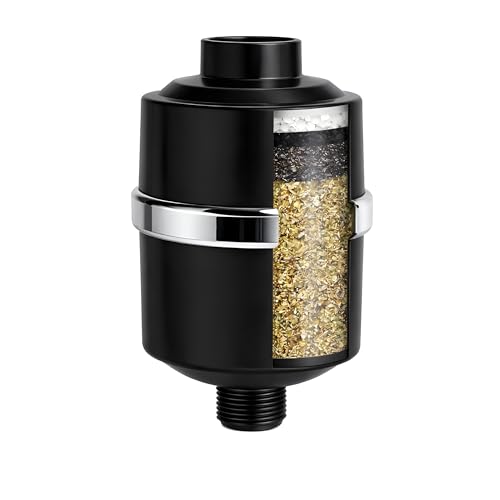 Crystal Quest Shower FilterA five-media cartridge including catalytic carbon — the class with a real mechanism against chloramine — at the budget end of the category, with a 10,000 to 15,000 gallon capacity that is among the longest here. Its certification line needs careful reading: IAPMO tested it, which is not the same as IAPMO certifying it.Five-stage multi-media: coconut shell GAC, c… | Catalytic carbon and a chloramine claim, cheaply | None |
Every figure in this table links to the page it came from in the write-ups below. Units we claim to have tested: 0.
WaterChef SF-7C
Catalytic carbon with a certification attached
The only unit in this registry that pairs a traceable NSF/ANSI 177 certification with catalytic carbon — the media class that has a mechanism against chloramine. WaterChef publishes a 96.6 percent chlorine figure and, notably, makes no chloramine claim at all despite using the media that could support one.
Published specifications
- Filter media
- Two-stage system built on "Advanced ThermalGuard" catalytic carbonCatalytic carbon is the media class that chemically addresses chloramine as well as free chlorine — though WaterChef publishes no chloramine performance figure.Source: WaterChef — SF-7C shower filter system (retrieved 2026-09-01)
- Stated flow rate
- 2.5 GPM on the standard modelA separate SF-7C-ECO version is sold for states that require 1.8 GPM fixtures. The two are different SKUs, not a restrictor swap.Source: WaterChef — SF-7C shower filter system (retrieved 2026-09-01)
- Rated cartridge life
- Up to 10,000 gallons, or about 6 monthsThe replacement part is the RCSF-7, sold singly and in a two-pack.Source: WaterChef — SF-7C shower filter system (retrieved 2026-09-01)
- Chloramine
- Not publishedWaterChef publishes nothing about chloramine. Catalytic carbon is the media class with a real mechanism against it, which makes the silence notable rather than damning — but an absent claim is not evidence of performance, and NSF/ANSI 177 does not evaluate chloramine either.
- Format
- Shower system with an adjustable handheld wand, five spray settings and a stainless steel hoseSource: WaterChef Premium Shower Filter System SF-7C, chrome — listing on Amazon.com (retrieved 2026-09-01)
- Housing
- Not publishedWaterChef does not state a housing material.
What it does well
- Certified to NSF/ANSI 177 by IAPMO R&T, with the certifying body named
- Built on catalytic carbon rather than KDF — a media class with a broader mechanism
- Published chlorine reduction of 96.6% across the rated cartridge life, not just when new
- 10,000 gallons or six months on a named replacement cartridge, the RCSF-7
- Makes no softening claim, which in this category is a mark of care
Where it falls short
- No chloramine claim at all, despite using the media class that addresses it
- No published housing material
- The 2.5 GPM standard model is not compliant in states capping fixtures at 1.8 GPM — that is a separate SKU
- Priced well above the cheapest certified option, which is an inline body
What it does not do
- It does not claim to reduce chloramine. Catalytic carbon is the media class with the right mechanism, but WaterChef publishes no chloramine figure and NSF/ANSI 177 does not evaluate chloramine performance, so nothing here is verified for it.
- It does not soften water, and WaterChef does not claim it does.
- It does not publish a housing material.
- The standard model is a 2.5 GPM system. Households in states that cap fixtures at 1.8 GPM need the separate SF-7C-ECO version instead.
Who it is for
Someone who wants a certification they can trace to a named body, on a media class that does more than KDF, and who wants a handheld wand as part of the deal.
Skip it if
You want a slim inline body or the cheapest certified option. This is a full shower system with a wand and a hose, and it is priced accordingly.
#ad · how we are funded · price as of October 16, 2026
Crystal Quest Shower Filter
Catalytic carbon and a chloramine claim, cheaply
A five-media cartridge including catalytic carbon — the class with a real mechanism against chloramine — at the budget end of the category, with a 10,000 to 15,000 gallon capacity that is among the longest here. Its certification line needs careful reading: IAPMO tested it, which is not the same as IAPMO certifying it.
Published specifications
- Filter media
- Five-stage multi-media: coconut shell GAC, catalytic carbon, ERA 6500, ERA 9500 and ceramic spherical mediaCatalytic carbon is the reason this unit can credibly mention chloramine at all — it is one of two media classes with a real mechanism against it.Source: Crystal Quest — Premium Shower Filter (retrieved 2026-09-01)
- Stated flow rate
- 2.0 GPMSource: Crystal Quest — Premium Shower Filter (retrieved 2026-09-01)
- Rated cartridge life
- 10,000 to 15,000 gallons, a 6 to 12 month lifespan depending on water quality and usageThe replacement cartridge is the CQE-RC-04045. The upper end of that range is the longest published capacity in this registry.Source: Crystal Quest — Premium Shower Filter (retrieved 2026-09-01)
- Chloramine
- Stated to reduce chloramines, alongside chlorine, VOCs and sulfurNo percentage is published for chloramine specifically. The catalytic carbon in the stack is the mechanism that makes the claim plausible.Source: Crystal Quest — Premium Shower Filter (retrieved 2026-09-01)
- Format
- Inline shower filter; a version bundled with a shower head is sold separatelySource: Crystal Quest shower filter — listing on Amazon.com (retrieved 2026-09-01)
- Housing
- Not publishedCrystal Quest does not state a housing material.
What it does well
- Names all five media: coconut shell GAC, catalytic carbon, ERA 6500, ERA 9500 and ceramic spherical media
- Catalytic carbon is one of only two media classes with a real mechanism against chloramine
- States chloramine, VOC and sulfur reduction explicitly, which very little of this category does
- 10,000 to 15,000 gallons and a 6 to 12 month lifespan — among the longest published capacities we cover
- Publishes a flow rate of 2.0 GPM
Where it falls short
- "Independently tested by IAPMO labs" is a testing claim, not a certification — and the body named is one that also certifies, which makes it easy to misread
- No plain reduction percentage on the maker's own page
- The retail listing's "99% Chlorine" headline is not matched by the maker's own wording
- No independent bench measurement of this unit that we could find
What it does not do
- It does not hold a certification. IAPMO ran the testing; Crystal Quest does not state that IAPMO certified the product or that it appears in any listing.
- It does not soften water, and Crystal Quest makes no softening claim.
- Its own site publishes no single clean reduction percentage — the figure is expressed as performance relative to the standard's requirement, which is harder to check than a plain number.
- The Amazon listing title advertises "99% Chlorine", a figure that does not appear in that form on Crystal Quest's own product page.
Who it is for
Someone on chloraminated water who wants catalytic carbon without paying the premium the certified catalytic-carbon unit asks, and who will read the testing claim for what it says.
Skip it if
You want a certification you can look up. "Independently tested by IAPMO labs in accordance to NSF/ANSI 177-2019" describes a test, not a listing.
#ad · how we are funded · price as of October 16, 2026
Side by side
Every figure is the manufacturer's own published data, taken from each company's product page and retail listing. Neither unit appears in an independent bench test we could locate.
The same body, two different jobs
The name IAPMO appears in the paperwork for both of these filters, and it is doing something completely different in each case. This is the most useful thing on the page, and it is the distinction the whole category blurs.
On the WaterChef, IAPMO R&T is the certifying body. WaterChef's wording names the organization and the standard together: IAPMO Research & Testing, NSF/ANSI Standard 177. That is a certification claim, and it is the only one of its kind on a catalytic-carbon unit in this registry.
On the Crystal Quest, IAPMO is the laboratory. The exact wording is "Independently tested by IAPMO labs in accordance to NSF/ANSI 177-2019 standards/protocols". Read it slowly. It says *tested by*, not certified by. It says *in accordance to* the standard's protocols, not *certified to* the standard. Both of those are deliberate, and both are accurate.
The gap between them is not a technicality. A certification is an ongoing program: a sample passes, the mark is issued, the product is listed where anyone can look it up, and the certifier keeps auditing and retesting to hold the mark. A test is one sample at one moment, and here the result of that test is not published as a number you can check. Crystal Quest's sentence is more honest than most of this category manages — it names a real body and a real standard rather than gesturing at "third-party tested" — but a test report is not a listing. How to check any certification yourself, and what the certification language actually means.
What the WaterChef's certification does and does not cover
The certification on each unit, in full
1 of 2 carry a certification we could trace to a certifying body.
What the makers claim about themselves
These are manufacturer statements, reported as manufacturer statements. A claim is not a certification, and separating the two is the whole point of this section.
Certification listings and manufacturer wording checked on 2026-09-01. What NSF/ANSI 177 actually covers.
A mark is only worth what its scope says. NSF/ANSI 177 evaluates four things: free available chlorine reduction, material safety (the housing does not leach anything into the water), structural integrity (it holds pressure), and a minimum flow rate. That is the entire list.
So WaterChef's certification tells you the 96.6 percent chlorine figure survived third-party scrutiny, that the plastic is not contributing anything, and that the unit will neither burst nor throttle your shower to a trickle. Those are real assurances and nothing else in the catalytic-carbon aisle offers them.
What the standard does not evaluate is everything else people buy these filters for: chloramine, hardness, lead, iron, fluoride, VOCs. A certified filter is not a verified filter for those things — it is a filter whose chlorine claim and basic safety were checked. Reading the mark as broader than that is the single most common mistake in this category.
The chloramine inversion
Here is the genuinely strange part. Roughly one in five US water systems disinfects with chloramine rather than free chlorine, and chloramine needs catalytic carbon or vitamin C — the redox media most of this category runs on does very little to it. The mechanism.
Both of these filters have catalytic carbon in them. Both therefore have the right mechanism. And the one that publishes a chloramine claim is the uncertified one.
Crystal Quest states chloramine reduction outright, alongside VOCs and sulfur, which very little of this category will do. It publishes no percentage for it. WaterChef, holding the certification and running the same media class, publishes nothing at all about chloramine — no figure, no mention.
The instinct is to read that as WaterChef being cagey. We read it the other way: WaterChef is declining to make a claim it cannot support with a number, which on a product page in this category is a mark of care rather than evasion. An absent claim is still not evidence of performance, though — the silence tells you about the company, not about the filter.
Capacity: the cheaper one lasts longer
Published cartridge life
2 of 2 publish this figure. Every number below links to where it came from.
Compiled from the manufacturers’ own published material on 2026-09-01. We have measured none of it ourselves — see how we rank. Found an error? Tell us and we will correct it.
WaterChef publishes 10,000 gallons or about six months, the convention most of this category uses. Crystal Quest publishes 10,000 to 15,000 gallons and a six to twelve month lifespan, the longest figure in this registry at its upper end.
Treat those two numbers as different kinds of statement. A single rated figure is a commitment; a range that varies "depending on water quality and usage" is a description of best and worst cases, and the honest planning assumption is the bottom of it. At the bottom of its range Crystal Quest matches WaterChef exactly. On genuinely good water it may run twice as long, and there is no way to know which you have without testing.
One thing that is not in doubt: the cheaper unit is cheaper to keep running as well as to buy, and its cartridge is a plain part number rather than a subscription. The twelve-month arithmetic, and how to tell when a cartridge is actually spent.
Two different products wearing the same category label
The specification tables make these look like rivals. They are not really competing for the same slot in a bathroom.
The WaterChef is a complete shower system: an adjustable handheld wand, five spray settings and a stainless steel hose, with the filtration built in. You are replacing your fixture. The Crystal Quest is an inline cylinder that threads onto the arm behind whatever head you already own, which is the format that works in a rental and the format that works when you like your existing head. Inline versus showerhead, in full.
Flow is worth a careful look before you buy the WaterChef. The standard model is 2.5 GPM, and several states cap shower fixtures at 1.8 GPM — WaterChef sells a separate SF-7C-ECO version for those, and it is a different SKU, not a restrictor you can swap in. Buy the wrong one and you have bought a non-compliant fixture. Crystal Quest's 2.0 GPM is the filter's rating rather than a fixture's, since your own head sets the flow. What either does to your pressure.
The 99 percent that only appears on Amazon
Crystal Quest's retail listing is titled "Removes 99% Chlorine, Chloramines & VOCs". That 99 percent figure does not appear in that form anywhere on Crystal Quest's own product page, which expresses performance relative to the standard's requirement rather than as a plain number.
We keep finding this pattern, and it is worth naming: a retail listing title is written to win a search, and it routinely says more than the manufacturer's own specifications will. When the two disagree, the maker's own documentation is the one to trust, because it is the one the company would have to defend.
WaterChef's number goes the other way. Its 96.6 percent appears on both the product page and the listing, and it is quoted across the rated 10,000-gallon cartridge life rather than when new. That is the harder version of a performance claim to make, because a filter's worst day is its last one, and a figure that holds to the end of the cartridge is a meaningfully different promise from a figure measured out of the box.
What each costs to run
Twelve months of ownership
Purchase price + (cartridges per year x cartridge price). Cadence comes from published specifications; the money comes from the live price layer or is left blank.
Prices as of October 16, 2026, from the live retailer feed. Cartridge prices are not included in the year-one figure above because they are a separate purchase with a separate live price. The full method.
The purchase gap between these two is wide, and the cartridge gap runs the same direction, so the WaterChef does not close the distance over time the way a cheap unit with an expensive pod would. You are paying a real premium for the certification and the fixture, across the life of the thing and not just on day one. Whether that is worth it is the verdict below.
The verdict
- Buy the WaterChef SF-7C if a traceable certification is the thing you are actually paying for, and you want it on catalytic carbon rather than on a redox puck. It is the only unit here that offers that combination, and the 96.6 percent holds across the whole cartridge rather than when new.
- Buy the Crystal Quest if you want catalytic carbon at the budget end, you already like your shower head, and you will read its testing sentence for exactly what it says. Five named media and a published chloramine claim for a fraction of the price is a defensible trade, as long as you know you are buying a test report rather than a listing.
- Buy the WaterChef if you are replacing the fixture anyway — but check whether your state caps fixtures at 1.8 GPM first, and order the ECO version if it does.
- Neither, on the strength of the chloramine claim alone. Both have the right media and neither has third-party chloramine evidence. The certification does not cover it either.
- Neither for hardness. Both are carbon filters; no shower filter performs ion exchange. Why that is.
- If you want the cheapest certified option, it is neither of these — the four units that hold a device-level certification include an inline body well below the WaterChef's price.
What we would skip, and why
Questions people actually ask
+ Is the Crystal Quest shower filter NSF certified?
No. Its wording is "Independently tested by IAPMO labs in accordance to NSF/ANSI 177-2019 standards/protocols", which describes a test run to the standard's protocols. It is not a statement that the product is certified to the standard or appears in any certification listing, and Crystal Quest does not claim one.
+ Which is better for chloramine?
Neither has third-party evidence for it. Both contain catalytic carbon, the media class that addresses chloramine, but NSF/ANSI 177 only evaluates free chlorine, so WaterChef's certification says nothing about chloramine and neither did Crystal Quest's test to that same standard. Crystal Quest is the only one of the two that makes the claim, without a percentage.
+ Why is the WaterChef so much more expensive?
Two reasons. It is a complete shower system with a handheld wand, five spray settings and a steel hose rather than an inline cylinder, and it carries a certification, which costs a manufacturer real money to obtain and maintain. The Crystal Quest is a cartridge in a housing that threads onto the arm behind your existing head.
+ Does the Crystal Quest really remove 99% of chlorine?
That figure comes from the retail listing title, not from Crystal Quest's own product page, which does not state it in that form. We report it as a listing claim rather than a specification. WaterChef's 96.6 percent, by contrast, appears on the maker's own page and is quoted across the full cartridge life.
+ Do either of them publish what the housing is made of?
No. Neither company states a housing material. For the WaterChef, the NSF/ANSI 177 certification covers material safety regardless, so the housing has been evaluated for what it might leach even though the material is not named. For the Crystal Quest there is no such assurance.
Sources
Everything on this page traces to one of these. Where a source is brand-owned we say so, because a filter maker explaining filter chemistry has an interest and you are entitled to weigh it.
- Plumbing & Mechanical, "NSF/ANSI Standard 177: A Level Playing Field for Shower Filter Claims" (retrieved 2026-09-01)
- NSF — NSF/ANSI 177 shower filter certification program
- NSF — public listing database, Shower Filter product type (retrieved 2026-09-09)
- IAPMO R&T — product listing and certification directory
- US EPA — Consumer Confidence Reports (CCR) for drinking water