Shower heads for hard water
Every head on this page is sold into a hard-water problem and none of them removes hardness — one was independently measured going in at 250 PPM and coming out at 251. So we ranked them on the two things a head genuinely changes.
Disclosure — some links on this page go to Amazon, and we earn a commission if you buy through them. It costs you nothing extra and it does not change what we recommend or in what order. The full disclosure.
No filtered shower head removes hardness. Independent bench testing of this category found none that reduced it, and one head was measured going in at roughly 250 PPM and coming out at 251. What a head does remove is chlorine — measured between 42 and 100 percent across the category. On hard water, buy for that, and for how often you will be changing the cartridge.
What a shower head can and cannot do to hard water
Hardness is dissolved calcium and magnesium. Taking it out of water means ion exchange — swapping those ions for sodium or potassium across a bed of resin — and that reaction needs seconds of contact time and a resin bed to happen in. Water is inside a shower head for roughly a tenth of a second, and there is no resin in there. The arithmetic is not close, and no amount of media layers changes it.
That is the mechanism. The measurements agree with it. When WaterFilterGuru put this category on a bench, they reported that none of the shower filters they tested reduced water hardness, despite several marketing claims to the contrary. We did not run those tests and we do not claim to — we are citing them, and crediting them, because they are the only measurements of this question we could find.
The single cleanest number in that body of work belongs to a product on this page. The Afina head was measured with hardness going in at roughly 250 PPM and coming out at 251 — unchanged, within noise, on a product whose marketing leans on hard water throughout. One PPM in the wrong direction is not a scandal. It is just the plainest available answer to the question this page is named after.
What the independent testing actually measured
Two of the heads here have a chlorine figure somebody independent produced. The rest are the manufacturer's own account of themselves, or nothing at all.
Across the wider category the independently measured chlorine results run from 42 to 100 percent, which is a very wide spread for products that look the same on a shelf. That spread is the argument for caring which one you buy. Hardness, by contrast, does not move for any of them.
How we ranked these
How we picked
Criteria first, products second. These are the things we ranked on, stated before anything is recommended.
- Hardness is excluded from the ranking, because no head affects it. That is not a scoring decision we made — it is what the measurements say, and it is why this page cannot be a list of which head softens best. Any product whose name or listing promises softening is marked below rather than credited.
- A certification traceable to a certifying body. Of every filtered shower head we cover, exactly one has one. On a page where nothing can be verified about hardness, the one verifiable thing decides the top.
- Independently measured chlorine reduction, credited to whoever took the measurement. Chlorine is the removable irritant, and on hard water it is the half of the problem a head can actually fix. We measured none of it.
- Published cartridge interval, read as a hard-water cost. Hard water loads the sediment stages faster than soft water does, so the interval on the box is the optimistic case. A 90-day cartridge and a 10,000-gallon one are not the same purchase.
- Whether the media is named at all, because it decides chloramine performance and because a maker who will not list it has told you something.
- What it does not do, stated on every pick. On this page that line is load-bearing: a head sold for hard water that reduces no hardness has to say so.
What we did not do: test any of these filters. We own none of them, we operate no lab, and nothing on this page is written as though we did. The full method.
One consequence is worth stating before the picks. The head at the top of this page is not the one with the best measured chlorine number. It is the one with a certification you can look up, because a certified result is a floor that holds across the cartridge's whole rated life, while a single bench measurement is one unit on one day. The two heads with the strongest measured numbers are second and third, and the write-ups say exactly what each of them does not publish.
Quick picks
Ranked on what can be verified: a traceable certification first, then media matched to your disinfectant. Tap a row to jump to the full write-up.
| # | Product | Best for | Certification | Price |
|---|---|---|---|---|
| 1 |  Culligan HSH-C135One of the few units in this category with a certification you can trace to the body that issued it. Culligan states plainly that the HSH-C135 is tested and certified by IAPMO R&T, and it runs the same WHR-140 cartridge and the same 10,000-gallon interval as the rest of its filtered range.Not published | A certified handheld shower head | NSF/ANSI 177 | |
| 2 |  Afina Filtered Shower HeadThe best chlorine number independently recorded for any filtered shower head — just under 99 percent. The same test found it reduced no hardness at all and that disinfection byproducts rose rather than fell, which is why it does not top our ranking.KDF-55 with calcium sulfite and activated ca… | The highest measured chlorine reduction | None | |
| 3 |  Canopy Filtered ShowerheadCanopy publishes almost nothing you can check — no media, no flow rate, no capacity, no certification. What saves it is somebody else's number: WaterFilterGuru measured 97% chlorine reduction, from 2.7 PPM down to 0.06.Not published | Measured chlorine reduction | None | |
| 4 | 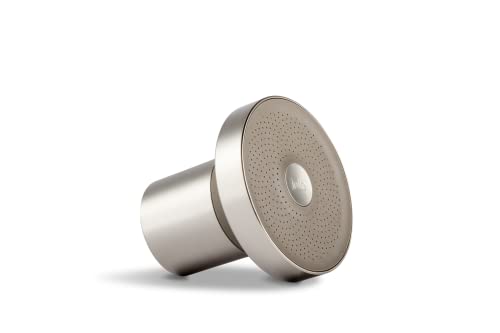 Jolie Filtered ShowerheadThe most searched shower filter in the United States, with a media pairing that makes sense and a certification line that does not. "Surpassing NSF-177 certifications" is a claim about exceeding a standard the product is not stated to hold.KDF-55 and calcium sulfite | The best-known name in the category | None | |
| 5 | 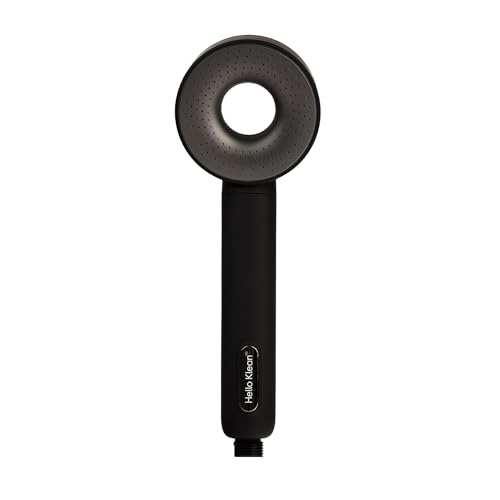 Hello Klean Hard Water Shower Head FilterSold explicitly as a hard water filter, which is the claim this site exists to check. Hello Klean's own listing describes reducing chlorine, impurities and heavy metals — none of which is hardness. Read the product name and the product claim as two different things.Not published | The hard-water positioning, examined | None | |
| 6 |  SparkPod 23-Stage Filtered Shower HeadAdvertised as 23-stage, which is a marketing unit rather than an engineering one — but unlike most stage-counters SparkPod does name its media, and the list is a sensible one. The catch is the interval: its own cartridge page says three to four months, which is twice the replacement rate of the six-month units here.Multi-stage filtration with activated carbon… | Stage counting, with the media actually named | None |
Every figure in this table links to the page it came from in the write-ups below. Units we claim to have tested: 0.
Culligan HSH-C135
A certified handheld shower head
One of the few units in this category with a certification you can trace to the body that issued it. Culligan states plainly that the HSH-C135 is tested and certified by IAPMO R&T, and it runs the same WHR-140 cartridge and the same 10,000-gallon interval as the rest of its filtered range.
Published specifications
- Filter media
- Not publishedCulligan states what the unit reduces, but not what media does the reducing.
- Stated flow rate
- 1.8 GPMSource: Culligan — HSH-C135 hand-held filtered showerhead (retrieved 2026-09-01)
- Rated cartridge life
- 10,000 gallons, or 6 monthsSource: Culligan — HSH-C135 hand-held filtered showerhead (retrieved 2026-09-01)
- Chloramine
- Not publishedCulligan publishes nothing about chloramine for this unit.
- Format
- Handheld shower head with integrated filter, supplied with a hose and wall bracketSource: Culligan — HSH-C135 hand-held filtered showerhead (retrieved 2026-09-01)
- Housing
- Plastic, chrome finishSource: Culligan HSH-C135 — listing on Amazon.com (retrieved 2026-09-01)
What it does well
- Explicitly "tested and certified by IAPMO R&T", with the certifying body named
- Published cartridge life of 10,000 gallons or 6 months
- Five spray settings and a published 1.8 GPM rating
- The WHR-140 cartridge is shared across several Culligan units, which keeps it easy to find
Where it falls short
- Culligan does not publish what is inside the cartridge
- No chloramine data
- Replaces the shower head rather than adding to it
What it does not do
- It does not soften water, and Culligan does not claim it does.
- It states nothing about chloramine.
- Culligan does not publish the filter media used in it.
Who it is for
Someone who wants a certified chlorine filter, and who wants a handheld on a hose rather than a fixed head or an inline unit.
Skip it if
You like your current shower head. This replaces it, and its 1.8 GPM is a fixed part of the deal.
#ad · how we are funded · price as of October 16, 2026
Afina Filtered Shower Head
The highest measured chlorine reduction
The best chlorine number independently recorded for any filtered shower head — just under 99 percent. The same test found it reduced no hardness at all and that disinfection byproducts rose rather than fell, which is why it does not top our ranking.
Published specifications
- Filter media
- KDF-55 with calcium sulfite and activated carbonSource: Afina filtered shower head, chrome — listing on Amazon.com (retrieved 2026-09-01)
- Stated flow rate
- 2.5 GPM with a 1.8 GPM restrictor supplied; 1.85 GPM measured independentlyThe measured figure is WaterFilterGuru's, not ours. A separate 1.8 GPM variant is sold for California and New York.Source: WaterFilterGuru, "Afina Shower Head Review" — independent lab testing, credited to them (retrieved 2026-09-06)
- Rated cartridge life
- 90 days on the shower head listing; the replacement-filter listing says every 2 monthsAfina's own two listings disagree. We report both rather than picking the flattering one; the independent reviewer recorded 2 months.Source: Afina filtered shower head, chrome — listing on Amazon.com (retrieved 2026-09-01)
- Chloramine
- Not publishedAfina publishes no chloramine performance figure.
- Format
- Replacement shower head with integrated filterSource: Afina filtered shower head, chrome — listing on Amazon.com (retrieved 2026-09-01)
- Housing
- Not publishedFinishes are listed — chrome, brushed nickel, matte black — but no housing material is stated.
What it does well
- Independently measured at just under 99% chlorine reduction, 1.68 PPM down to 0.02 PPM
- Media named outright: KDF-55 with calcium sulfite and activated carbon
- Measured flow of 1.85 GPM, which the reviewer recorded as retaining 100% of baseline
- Sold in several finishes, and in a 1.8 GPM variant for California and New York
Where it falls short
- No certification of any kind
- Disinfection byproducts rose in independent testing
- Marketed for hard water while reducing no hardness
- Short cartridge interval, and the maker's own figures disagree on what it is
What it does not do
- It does not soften water. An independent lab measured hardness going in at roughly 250 PPM and coming out at 251 — despite the hard-water marketing.
- It did not reduce disinfection byproducts in that test. All three measured DBPs increased after filtration rather than falling.
- It holds no certification. The independent reviewer recorded it as neither performance certified nor design certified.
Who it is for
Someone on chlorinated municipal water who wants the strongest measured chlorine result in a replacement head and is buying for that specifically.
Skip it if
Your report shows disinfection byproducts near their limits, or you want a certification. Neither is this product's strength — the DBP discussion.
#ad · how we are funded · price as of October 16, 2026
Canopy Filtered Showerhead
Measured chlorine reduction
Canopy publishes almost nothing you can check — no media, no flow rate, no capacity, no certification. What saves it is somebody else's number: WaterFilterGuru measured 97% chlorine reduction, from 2.7 PPM down to 0.06.
Published specifications
- Filter media
- Not publishedCanopy's own product page states no filter media. We checked it on 2026-09-01.
- Stated flow rate
- Not publishedNo flow rate is published on Canopy's product page.
- Rated cartridge life
- Not publishedNo gallon capacity or replacement interval is published on the product page.
- Chloramine
- Not publishedNot stated.
- Format
- Replacement shower head with integrated filter, three spray settingsSource: Canopy — Filtered Showerhead (retrieved 2026-09-01)
- Housing
- Not publishedNot stated.
What it does well
- Independently measured at 97% chlorine reduction, 2.7 PPM down to 0.06 PPM
- Three spray settings on a design-led head
- Widely stocked, so cartridges are easy to find
Where it falls short
- Publishes no media list, no flow rate, no capacity and no certification
- Was not one of the units shown to remove disinfection byproducts in that test
- Nothing published about chloramine
What it does not do
- It does not soften water. No filter in the independent test set reduced hardness, including this one.
- It publishes no filter media, flow rate, cartridge capacity or certification on its own product page.
- It removed chlorine in that test but was not among the two units that removed disinfection byproducts.
Who it is for
A reader who trusts an independent measurement more than a spec sheet, and who wants a design-led head rather than an inline puck.
Skip it if
You want to compare it on paper. There is no paper. Every figure we have for this product came from someone else's lab.
#ad · how we are funded · price as of October 16, 2026
Jolie Filtered Showerhead
The best-known name in the category
The most searched shower filter in the United States, with a media pairing that makes sense and a certification line that does not. "Surpassing NSF-177 certifications" is a claim about exceeding a standard the product is not stated to hold.
Published specifications
- Filter media
- KDF-55 and calcium sulfiteSource: Jolie — The Jolie Filtered Showerhead (retrieved 2026-09-01)
- Stated flow rate
- 1.8 GPMStated as compliant with California and New York water consumption standards.Source: Jolie — The Jolie Filtered Showerhead (retrieved 2026-09-01)
- Rated cartridge life
- Every 90 days on subscriptionNo gallon capacity is published.Source: Jolie — The Jolie Filtered Showerhead (retrieved 2026-09-01)
- Chloramine
- Not publishedJolie publishes no chloramine performance data.
- Format
- Replacement shower head with integrated filterSource: Jolie Filtered Showerhead — listing on Amazon.com (retrieved 2026-09-01)
- Housing
- Not publishedJolie lists finishes rather than a housing material.
What it does well
- Media named outright: KDF-55 and calcium sulfite
- 1.8 GPM, compliant with California and New York flow limits
- 90-day cartridge cadence on subscription, so replacement actually happens
- Replaces the shower head, so there is nothing extra hanging off the arm
Where it falls short
- "Surpassing NSF-177 certifications" is a claim, not a certification
- No gallon capacity published, so cost per gallon cannot be computed from its own data
- Nothing published about chloramine
What it does not do
- It does not soften water. KDF-55 and calcium sulfite do not remove calcium or magnesium.
- It does not hold a stated NSF/ANSI 177 certification; the published wording is that it surpasses NSF-177 certifications.
- It does not treat hair loss. Reduced shedding and reduced breakage are different claims from androgenetic hair loss — see the hair-loss evidence page.
Who it is for
A reader who wants the well-known unit, a 1.8 GPM head that meets state flow limits, and a subscription that removes the decision about when to change the cartridge.
Skip it if
You want a verifiable certification rather than a testing claim, or you want a published gallon capacity you can do arithmetic with.
#ad · how we are funded · price as of October 16, 2026
Hello Klean Hard Water Shower Head Filter
The hard-water positioning, examined
Sold explicitly as a hard water filter, which is the claim this site exists to check. Hello Klean's own listing describes reducing chlorine, impurities and heavy metals — none of which is hardness. Read the product name and the product claim as two different things.
Published specifications
- Filter media
- Not publishedHello Klean's listing names target contaminants rather than media.
- Stated flow rate
- Not publishedNo flow rate published in material we could retrieve.
- Rated cartridge life
- Not publishedNo gallon capacity published in material we could retrieve.
- Chloramine
- Not publishedNo chloramine performance is published.
- Format
- Shower head with integrated filter; a separate inline version is also soldSource: Hello Klean hard water shower head filter — listing on Amazon.com (retrieved 2026-09-01)
- Housing
- Not publishedFinishes are listed; the material is not.
What it does well
- Sold in both a shower head and an inline version, so it fits either shower
- Claims cover chlorine, heavy metals such as iron, copper and lead
- Color range that does not look like plumbing hardware
Where it falls short
- Named for a problem the product does not claim to solve
- No published certification we could verify
- The 88% / 85% / 79% satisfaction figures are the brand's own study, not independent measurement
What it does not do
- It does not soften water, despite the hard-water name. Its own listing claims chlorine, impurities and heavy metals.
- It publishes no NSF/ANSI certification we could verify.
- Its self-reported satisfaction figures come from a study it commissioned itself.
Who it is for
Someone who came looking for a hard water filter, and who is willing to read what the listing actually promises before buying the name.
Skip it if
You want your water softened. Nothing in this unit's own claim list addresses calcium or magnesium.
#ad · how we are funded · price as of October 16, 2026
SparkPod 23-Stage Filtered Shower Head
Stage counting, with the media actually named
Advertised as 23-stage, which is a marketing unit rather than an engineering one — but unlike most stage-counters SparkPod does name its media, and the list is a sensible one. The catch is the interval: its own cartridge page says three to four months, which is twice the replacement rate of the six-month units here.
Published specifications
- Filter media
- Multi-stage filtration with activated carbon, KDF and calcium sulfiteSparkPod's retail listing additionally lists vitamin C and ceramic among the 23 stages. The stage count is a layer count rather than a measure of filtration steps.Source: SparkPod — High Output Shower Filter Cartridge (retrieved 2026-09-01)
- Stated flow rate
- Not publishedSparkPod publishes no flow rate for the filtered head.
- Rated cartridge life
- Each cartridge lasts 3 to 4 months of daily useSparkPod's own cartridge page gives months rather than gallons. Retail copy elsewhere quotes a gallon figure; we use the maker's own wording.Source: SparkPod — High Output Shower Filter Cartridge (retrieved 2026-09-01)
- Chloramine
- Not publishedSparkPod makes no chloramine claim. Vitamin C appears in its stage list, which is the right media class, but no quantity or performance figure is published.
- Format
- Replacement shower head with a removable capsule filter, three spray settings, six-inch round faceSource: SparkPod filtered shower head, 23-stage, polished chrome — listing on Amazon.com (retrieved 2026-09-01)
- Housing
- Not publishedSparkPod states the finish and not the underlying material.
What it does well
- Names its media rather than hiding behind the stage count: activated carbon, KDF and calcium sulfite
- Vitamin C and ceramic are listed among the stages on its retail listing, which is a broader stack than most heads
- A complete replacement head with three spray settings, so one purchase replaces the fitting entirely
- Removable capsule filter makes the cartridge swap a visible, simple job
Where it falls short
- "23-stage" counts layers, not filtration steps — a mesh screen is a stage
- Three-to-four-month cartridge interval, roughly twice the replacement rate of the six-month units here
- No certification and no published reduction percentage
- No published flow rate, so you cannot check it against a state fixture cap
What it does not do
- It does not hold a certification, and SparkPod publishes none.
- It does not soften water, despite hard-water language in its retail listing. Nothing in this category does.
- It publishes no flow rate.
- It publishes no reduction percentage for anything it claims to remove.
Who it is for
Someone who wants a complete replacement head with the filter built in, three spray settings, and a media list they can actually read.
Skip it if
You dislike buying cartridges. A three-to-four-month interval is four changes a year at the short end, against two for most of this registry.
#ad · how we are funded · price as of October 16, 2026
On hard water, the cartridge is the real decision
This is the part of the category that hard water genuinely changes, and almost nobody writing about shower heads mentions it. A cartridge has mechanical stages — mesh, sediment pads — in front of the reactive media. Hard water carries more for those stages to catch, so they load faster. The interval printed on the box is measured under conditions that are not yours, and on hard water it is the optimistic end.
Published cartridge interval across the heads on this page
4 of 6 publish this figure. Every number below links to where it came from.
Compiled from the manufacturers’ own published material on 2026-09-01. We have measured none of it ourselves — see how we rank. Found an error? Tell us and we will correct it.
Read the spread rather than the rows. The Culligan publishes 10,000 gallons or six months, which is the category convention and the longest interval here. The SparkPod publishes three to four months. Afina's own listings disagree with each other — 90 days on the head, every two months on the replacement filter. And two of these six publish no interval at all, which on hard water is the least useful thing a maker can decline to tell you.
That difference compounds. A 90-day cartridge is roughly four purchases a year against the Culligan's two, before hard water shortens either of them. How often to actually change it, and the twelve-month arithmetic for the whole registry.
What actually helps with hard water in a shower
- Descale the head you already own. If your complaint is weak or spitting jets, that is scale on the nozzles, not a filtration problem, and an overnight vinegar soak costs nothing. Doing this before you buy anything is the single highest-value step on this page.
- Decide whether you are buying for hardness or for chlorine. They are different problems with different answers, and only one of them has a shower-head solution. The decision, side by side.
- If it is genuinely hardness — scale, spotting, lather — look at ion exchange. A whole-house softener, or the one shower-point product that actually performs the reaction and is not a filter at all.
- If it is chlorine, and on municipal water it usually is part of it, buy from this page. Then check which disinfectant your utility uses before you choose, because a chloraminated supply changes the media you need.
- If you would rather keep the shower head you own, you want an inline filter instead of any of these. The inline ranking covers that format on the same criteria.
What twelve months of these costs
The purchase is the small half on hard water. The cartridges are the recurring half, and the interval differences above are what drive the gap.
Twelve-month cost of the heads on this page
Purchase price + (cartridges per year x cartridge price). Cadence comes from published specifications; the money comes from the live price layer or is left blank.
Prices as of October 16, 2026, from the live retailer feed. Cartridge prices are not included in the year-one figure above because they are a separate purchase with a separate live price. The full method.
Which of these to buy
- You want the one checkable thing in the category → the [Culligan HSH-C135](/reviews/culligan-wsh-c125). The only filtered shower head we cover that is tested and certified by a named body, IAPMO R&T, on the longest published interval here. Honest cons: it is a handheld on a hose rather than a fixed head, its 1.8 GPM is fixed, Culligan publishes no media list for it, and it states nothing about chloramine.
- You want the highest measured chlorine number → the [Afina](/reviews/afina-filtered-showerhead). Just under 99 percent, 1.68 PPM down to 0.02, measured by somebody other than the manufacturer. Honest cons: the same test found hardness unchanged at 250 to 251 PPM and all three measured disinfection byproducts higher after filtration rather than lower, it holds no certification, and its own listings disagree about the cartridge interval.
- You want the second-strongest measured number → the [Canopy](/reviews/canopy-filtered-showerhead). 97 percent, 2.7 PPM down to 0.06, and the measurement is the reason to consider it. Honest cons: Canopy publishes almost nothing you can check — no media, no flow rate, no capacity, no certification — so the one number that recommends it is somebody else's, and it is priced above heads that publish more.
- You want the name everyone recognizes, with the media stated → the [Jolie](/reviews/jolie-filtered-showerhead). KDF-55 and calcium sulfite, named outright, from the best-known brand in the category, at 1.8 GPM. Honest cons: no certification, no independent measurement we could find, a 90-day subscription cartridge, and hard-water marketing it cannot support.
- You want the hard-water positioning examined rather than repeated → the [Hello Klean](/reviews/hello-klean-shower-filter). It is a competent chlorine filter and we rank it as one. Honest cons: the product is called a Hard Water Shower Head Filter and reduces no hardness, and it publishes no media, no flow rate, no capacity and no certification — so the name is doing work the spec sheet does not.
- You want three spray settings cheaply, with the media named → the [SparkPod](/reviews/sparkpod-filtered-shower-head). Activated carbon, KDF and calcium sulfite, all named, on a removable capsule. Honest cons: a three-to-four month cartridge is roughly twice the frequency of the 10,000-gallon units and hard water shortens it further, it is sold on a 23-stage count, and it holds no certification.
- None of these, if hardness is the whole complaint. Nothing on this page will change your water's hardness by a measurable amount. What will.
What we would skip, and why
Anything whose own title calls it a water softener
The Kitsch head uses that phrase in its own listing while its media is described as a blend of KDF-55 and calcium sulfite. Neither performs ion exchange, so the product cannot do the thing its title names. This is the cleanest example in the category, not the only one — the full correction.
A stage count offered where a hardness answer should be
The iSpring SF2S advertises 33 stages and 18 media types, names vitamin C, and carries softener language. Thirty-three layers of the wrong chemistry is still the wrong chemistry — what a stage actually is.
A whole-house softener's job, asked of a shower head
If scale on the fixtures, spotting on the glass and soap that will not lather are your actual complaint, no head on this page addresses any of it. That is a softener decision, and the one shower-point product that genuinely performs ion exchange is not a filter at all.
Questions people actually ask
+ Do shower heads for hard water actually work?
Not on hardness. Independent bench testing of this category found no filter that reduced water hardness, and one head on this page was measured going in at roughly 250 PPM and coming out at 251. They do reduce chlorine, which is a real benefit and a different claim.
+ What is the best shower head for hard water?
On the only thing you can verify, the Culligan HSH-C135 — it is the one filtered shower head we cover that is tested and certified by a named body, IAPMO R&T. On measured chlorine reduction the Afina is highest at just under 99 percent, with Canopy at 97 percent. None of the three changes your water's hardness.
+ Will a filtered shower head stop limescale on my shower head?
No. The calcium and magnesium that form scale pass straight through, so deposits keep forming on the nozzles. The fix is mechanical and free: an overnight vinegar soak. A filter changes what the water carries chemically, not what it leaves behind as it dries.
+ Why do shower heads say hard water if they do not soften water?
Because hard water is what people search for, and the products do address a real part of the experience — chlorine, which dries skin and hair alongside hardness. The claim slides from a true statement about chlorine to an implied one about minerals. One product we cover calls itself a shower water softener outright while running KDF-55 and calcium sulfite, neither of which performs ion exchange.
+ How often do I need to change the cartridge on hard water?
Sooner than the box says. Hard water carries more for the mechanical stages to catch, so they load faster than the rated interval assumes. Intervals on this page run from three months to 10,000 gallons or six months, and two of the six makers publish no interval at all.
+ Should I get a shower head filter or an inline filter for hard water?
Neither does anything for hardness, so decide on format. A head replaces your fixture and you inherit its flow rate and spray pattern; an inline filter sits behind the head you already own and leaves both alone. The inline format also carries the stronger certification record in this category.
Sources
Everything on this page traces to one of these. Where a source is brand-owned we say so, because a filter maker explaining filter chemistry has an interest and you are entitled to weigh it.
- WaterFilterGuru, "The Best Shower Head Filter" — independent lab testing, credited to them (retrieved 2026-09-01)
- PICKI NIKI, "Filtered shower head technology explained" — brand-owned, cited for its published contact-time figures (retrieved 2026-09-01)
- Plumbing & Mechanical, "NSF/ANSI Standard 177: A Level Playing Field for Shower Filter Claims" (retrieved 2026-09-01)
- NSF — NSF/ANSI 177 shower filter certification program
- US EPA — Consumer Confidence Reports (CCR) for drinking water