Filterbaby vs Jolie
Two premium filters, two different media classes, and the same unverifiable certification wording on both. Your disinfectant decides this one.
Disclosure — some links on this page go to Amazon, and we earn a commission if you buy through them. It costs you nothing extra and it does not change what we recommend or in what order. The full disclosure.
On chloraminated water, Filterbaby — it is the only one of the two that even claims chloramine reduction, and Jolie's KDF-55 and calcium sulfite cannot do it. On free chlorine, Jolie, because it publishes a 1.8 GPM flow rate and Filterbaby publishes none. Two warnings that apply to both: neither holds a certification, and both use the same "exceeds/surpasses NSF-177" construction, which describes beating a standard neither is stated to hold. Filterbaby's 99.9% chlorine claim was independently measured at about 86%.
Quick picks
Ranked on what can be verified: a traceable certification first, then media matched to your disinfectant. Tap a row to jump to the full write-up.
| # | Product | Best for | Certification | Price |
|---|---|---|---|---|
| 1 |  Filterbaby Pro Series Shower FilterThe only unit here built on activated carbon fiber and a polyethylene membrane rather than KDF, calcium sulfite or vitamin C. It claims up to 99.9 percent on both chlorine and chloramine; the one independent measurement of it recorded 86 percent on chlorine.Advanced activated carbon fiber with a Japan… | A different media class entirely | None | |
| 2 | 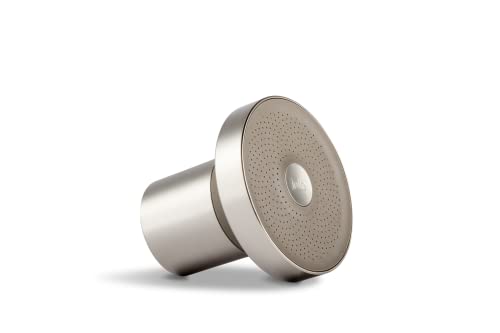 Jolie Filtered ShowerheadThe most searched shower filter in the United States, with a media pairing that makes sense and a certification line that does not. "Surpassing NSF-177 certifications" is a claim about exceeding a standard the product is not stated to hold.KDF-55 and calcium sulfite | The best-known name in the category | None |
Every figure in this table links to the page it came from in the write-ups below. Units we claim to have tested: 0.
Filterbaby Pro Series Shower Filter
A different media class entirely
The only unit here built on activated carbon fiber and a polyethylene membrane rather than KDF, calcium sulfite or vitamin C. It claims up to 99.9 percent on both chlorine and chloramine; the one independent measurement of it recorded 86 percent on chlorine.
Published specifications
- Filter media
- Advanced activated carbon fiber with a Japanese polyethylene membrane ultra filter, stated to capture down to 0.00001 mmSource: Filterbaby — Pro Series shower filter (retrieved 2026-09-01)
- Stated flow rate
- Not publishedFilterbaby publishes no flow rate for the Pro Series.
- Rated cartridge life
- Replace at least every 90 daysThe maker states chlorine reduction stays above 94% effective after 10,000 L, but chloramine and lead only after 1,000 L — a tenfold difference in the same sentence.Source: Filterbaby — Pro Series shower filter (retrieved 2026-09-01)
- Chloramine
- Claimed to reduce up to 99.9%, stated as above 94% effective after 1,000 LRead the capacity alongside the percentage. The chlorine claim carries a 10,000 L figure; chloramine carries 1,000 L.Source: Filterbaby — Pro Series shower filter (retrieved 2026-09-01)
- Format
- Inline — the maker states "showerhead not included"Source: Filterbaby — Pro Series shower filter (retrieved 2026-09-01)
- Housing
- Titanium-aluminum, described as food-grade materialSource: Filterbaby — Pro Series shower filter (retrieved 2026-09-01)
What it does well
- Media named specifically: advanced activated carbon fiber plus a polyethylene membrane
- Titanium-aluminum housing rather than plastic
- One of very few units in this category to claim chloramine reduction at all
- Makes no softening claim, which in this category is a mark of care
Where it falls short
- Independently measured at about 86% chlorine reduction against a 99.9% claim
- Chloramine and lead capacity stated at a tenth of the chlorine capacity
- No published flow rate
- No certification, despite the "exceed NSF 177" wording
What it does not do
- It does not hold a certification. Its own wording is "3rd-Party Tested To Exceed NSF 177 Standards", which describes exceeding a standard rather than holding it.
- It does not sustain its chloramine claim as long as its chlorine claim: the maker states above 94% effective after 10,000 L for chlorine, but after only 1,000 L for chloramine and lead.
- It makes no hard-water or softening claim — correctly — so it does nothing about hardness.
- It publishes no flow rate, so you cannot check it against a state fixture cap.
Who it is for
Readers who want a metal-bodied inline unit and a media class the rest of this category does not use, and who read the capacity figures carefully.
Skip it if
You are buying on the 99.9 percent headline. The independent measurement came in well below it, and the chloramine figure carries a capacity ten times shorter than the chlorine one.
#ad · how we are funded · price as of October 17, 2026
Jolie Filtered Showerhead
The best-known name in the category
The most searched shower filter in the United States, with a media pairing that makes sense and a certification line that does not. "Surpassing NSF-177 certifications" is a claim about exceeding a standard the product is not stated to hold.
Published specifications
- Filter media
- KDF-55 and calcium sulfiteSource: Jolie — The Jolie Filtered Showerhead (retrieved 2026-09-01)
- Stated flow rate
- 1.8 GPMStated as compliant with California and New York water consumption standards.Source: Jolie — The Jolie Filtered Showerhead (retrieved 2026-09-01)
- Rated cartridge life
- Every 90 days on subscriptionNo gallon capacity is published.Source: Jolie — The Jolie Filtered Showerhead (retrieved 2026-09-01)
- Chloramine
- Not publishedJolie publishes no chloramine performance data.
- Format
- Replacement shower head with integrated filterSource: Jolie Filtered Showerhead — listing on Amazon.com (retrieved 2026-09-01)
- Housing
- Not publishedJolie lists finishes rather than a housing material.
What it does well
- Media named outright: KDF-55 and calcium sulfite
- 1.8 GPM, compliant with California and New York flow limits
- 90-day cartridge cadence on subscription, so replacement actually happens
- Replaces the shower head, so there is nothing extra hanging off the arm
Where it falls short
- "Surpassing NSF-177 certifications" is a claim, not a certification
- No gallon capacity published, so cost per gallon cannot be computed from its own data
- Nothing published about chloramine
What it does not do
- It does not soften water. KDF-55 and calcium sulfite do not remove calcium or magnesium.
- It does not hold a stated NSF/ANSI 177 certification; the published wording is that it surpasses NSF-177 certifications.
- It does not treat hair loss. Reduced shedding and reduced breakage are different claims from androgenetic hair loss — see the hair-loss evidence page.
Who it is for
A reader who wants the well-known unit, a 1.8 GPM head that meets state flow limits, and a subscription that removes the decision about when to change the cartridge.
Skip it if
You want a verifiable certification rather than a testing claim, or you want a published gallon capacity you can do arithmetic with.
#ad · how we are funded · price as of October 17, 2026
Side by side
Every figure is the manufacturer's own published wording except the 86% chlorine measurement, which is WaterFilterGuru's and credited to them. We have tested neither product.
The decision is your disinfectant, and it is not close
Strip away the branding and these two filters are built on different chemistry for different water, which makes this one of the cleaner comparisons on this site.
Jolie uses KDF-55 and calcium sulfite — the category's conventional and well-evidenced pairing for free chlorine. KDF-55 is a copper-zinc redox medium, calcium sulfite is a reducing agent that tolerates hot water well, and between them they have a real record. Neither breaks the chlorine-ammonia bond, so neither does anything for chloramine, and Jolie publishes nothing claiming otherwise.
Filterbaby uses activated carbon fiber with a polyethylene membrane, which is a different class from anything else in this registry. Carbon is the medium that can, in catalytic form, address chloramine — and Filterbaby is one of very few units in this category to claim chloramine reduction at all.
You can find out which disinfectant you are on in about two minutes — your utility names it in the annual Consumer Confidence Report the EPA requires it to publish. How to find and read yours.
The 86% measurement, and why we lead with it
Filterbaby claims up to 99.9% chlorine reduction. The one independent bench measurement of it that we could find recorded about 86%.
We want to be fair about what that gap means. 86% chlorine reduction is a genuinely useful result — it is not a failure, and plenty of filters do worse. "Up to" is also a ceiling rather than a typical figure, and a single bench run on one unit is not a certification program. But the distance between 99.9% and 86% is the distance between "essentially all of it" and "most of it", and it is exactly the gap a certification exists to close. Jolie, for its part, has no independent measurement at all — which is not better, it is just unmeasured.
For comparison, the Weddell Duo was independently measured at 100% chlorine removal and publishes its NSF test dates and reduction ranges, and it costs less than either of these. That is the benchmark both of these premium products are being measured against. The full ranking.
Neither holds a certification, and both say so the same way
Certifications held by these two products
0 of 2 carry a certification we could trace to a certifying body.
What the makers claim about themselves
These are manufacturer statements, reported as manufacturer statements. A claim is not a certification, and separating the two is the whole point of this section.
Certification listings and manufacturer wording checked on 2026-09-01. What NSF/ANSI 177 actually covers.
Empty for both, and the way each one fills that space is the most interesting thing about this comparison. These are two of the most prominent premium brands in the category, and they reached for an identical construction:
Neither names a certifying body, a listing identifier or a laboratory. How to check any certification claim yourself.
"Exceeds" and "surpasses" are doing the same work in both sentences: they borrow the authority of NSF/ANSI 177 while describing something that is not a certification to it. A certified product does not need the word, because it can simply name the body and point at the listing. Of the 35 products we track, four can do that. The four.
Neither brand is doing anything unusual by this category's standards, and neither claim is necessarily untrue. The point for a buyer spending premium money is narrower: on certification, these two are level, and both are below the cheapest certified unit we cover.
Flow rate: the one clear documentation win
Published flow rate
1 of 2 publish this figure. Every number below links to where it came from.
Compiled from the manufacturers’ own published material on 2026-09-01. We have measured none of it ourselves — see how we rank. Found an error? Tell us and we will correct it.
Jolie publishes 1.8 GPM and states compliance with California and New York water consumption standards. Filterbaby publishes nothing.
This matters more than it looks. Flow rate is the one specification that ties a filtration claim to a condition — contact time is the mechanism, and a percentage with no flow figure attached to it cannot be checked or reproduced. It is also a practical matter if you live in a state with a fixture cap, and a predictor of the shower you will actually get. What a filter does to pressure.
There is a format asymmetry worth naming here, in fairness to Filterbaby: Jolie is the shower head, so its flow rate is the fixture's flow rate and it has to publish one. Filterbaby is an inline body feeding whatever head you already own, so the flow you get is partly yours. That explains the omission without excusing it — a filter still has a flow rate at which its own figures were obtained.
Format: do you want to keep your shower head?
This decides it for a lot of people before any chemistry comes into it, and the two products sit on opposite sides.
- Filterbaby is inline and states "showerhead not included". Your head stays, the filter goes between it and the arm, and you add a few inches of drop. Best if you like your fixture, or you rent and want nothing permanent. The inline ranking.
- Jolie replaces the head. One object, nothing hanging off the arm, and the filter and fixture are a single purchase and a single warranty. Best if your existing head is unremarkable anyway. The filtered-head ranking.
- Low clearance changes the answer toward Jolie, or toward a very short inline body. An inline unit's drop is the whole decision in a shower where the head is already near your head.
Twelve-month cost
Cost of ownership, both units
Purchase price + (cartridges per year x cartridge price). Cadence comes from published specifications; the money comes from the live price layer or is left blank.
Prices as of October 17, 2026, from the live retailer feed. Cartridge prices are not included in the year-one figure above because they are a separate purchase with a separate live price. The full method.
Both run a 90-day cartridge, so the cadence is a wash and the arithmetic comes down to cartridge price. One documentation difference: Filterbaby publishes capacity in liters (10,000 L for chlorine), which lets you sanity-check the 90 days against your own usage. Jolie publishes no gallon capacity at all, so its cost per gallon cannot be computed from its own data. The full arithmetic for everything we track.
Jolie's cartridge arrives on subscription by default, which is worth a look before you click the discounted price — the thing a subscription genuinely buys you is that the replacement actually happens, which is the most common failure mode in this category. What you are buying with a subscription.
What neither of them does
- Neither softens water. Both are correct to make no softening claim, and we note that as a mark of care — plenty of their competitors do claim it. If scale or that tight squeaky feeling is your complaint, neither of these is the purchase. Why no shower filter softens.
- Neither holds a traceable certification. Level on this, and both below the cheapest certified unit we cover.
- Neither removes fluoride, at shower contact times, by either media class. The chemistry.
- Neither treats hair loss. Jolie's listing claims clinical testing for reduced shedding, and Filterbaby's claims joint development with a dermatologist. Reduced shedding and androgenetic hair loss are different things. What the evidence supports.
What we would skip, and why
Skip Filterbaby if
You are buying on the 99.9% headline. The one independent measurement of it came in at about 86% on chlorine, and its chloramine claim carries a capacity ten times shorter than its chlorine claim. It also publishes no flow rate at all.
Skip Jolie if
You are on chloraminated water. Jolie's media is KDF-55 and calcium sulfite, neither of which breaks the chlorine-ammonia bond, and Jolie publishes nothing about chloramine — which is at least not a false claim, but it is not an answer either.
The verdict, by buyer
On chloraminated water: Filterbaby, with the 1,000 L capacity understood — it is the only one of the two with a mechanism and a claim. Check the chloramine page before settling, because better-documented options exist.
On free chlorine, which is most readers: Jolie, for the published 1.8 GPM, the conventional and well-evidenced media pairing, and the single-object format. You are paying a brand premium for a product with no independent measurement.
Keeping your existing shower head, or renting: Filterbaby, on format alone.
If a verifiable certification is what you actually want: neither. Both are premium-priced and uncertified, and the Weddell Duo measured 100% chlorine removal with published test dates for less money. If you would rather work the decision through from first principles, how to choose a shower filter puts the five questions in order.
Questions people actually ask
+ Is Filterbaby or Jolie better?
It depends on your disinfectant. On chloraminated water Filterbaby is the only one of the two that claims chloramine reduction, because Jolie's KDF-55 and calcium sulfite cannot break the chlorine-ammonia bond. On free chlorine Jolie is the better-documented product, because it publishes a 1.8 GPM flow rate and Filterbaby publishes none.
+ Does Filterbaby really remove 99.9% of chlorine?
The one independent measurement we could find recorded about 86%. That is a useful result rather than a failure, and "up to 99.9%" is a ceiling rather than a typical figure, but the gap between the two numbers is exactly what a certification program exists to close.
+ Is Jolie NSF certified?
No. Jolie's published wording is that its media blend surpasses NSF-177 certifications and is rigorously tested by third-party labs, which describes beating a standard the product is not stated to hold, with no certifying body or laboratory named. Filterbaby uses the same construction with the word "exceed".
+ Which one works on chloramine?
Filterbaby claims it; Jolie publishes nothing about it. Read Filterbaby's capacity alongside the percentage though: it states above 94% effective after 10,000 L for chlorine but after only 1,000 L for chloramine, a tenfold difference in the same sentence.
+ Do I have to replace my shower head for either?
For Jolie, yes — it is the shower head, with the filter integrated. For Filterbaby, no: it is an inline body that fits between the shower arm and your existing head, and the maker states the showerhead is not included.
+ Do either of them soften hard water?
No, and neither claims to, which in this category is a mark of care. Softening requires ion exchange over a salt-regenerated resin bed, and neither carbon fiber nor KDF-55 and calcium sulfite perform it.
Sources
Everything on this page traces to one of these. Where a source is brand-owned we say so, because a filter maker explaining filter chemistry has an interest and you are entitled to weigh it.
- Plumbing & Mechanical, "NSF/ANSI Standard 177: A Level Playing Field for Shower Filter Claims" (retrieved 2026-09-01)
- NSF — NSF/ANSI 177 shower filter certification program
- NSF — public listing database, Shower Filter product type (retrieved 2026-09-09)
- IAPMO R&T — product listing and certification directory
- WaterFilterGuru, "The Best Shower Head Filter" — independent lab testing, credited to them (retrieved 2026-09-01)
- US EPA — Consumer Confidence Reports (CCR) for drinking water
- US EPA WaterSense — showerheads and the 2.5 gpm federal maximum